What First-Time Visitors Should Know Before Going to a Texas Car Show
A Texas car show is easy to enjoy, but it is even better when you know what to expect before you get there.
First-time visitors sometimes assume every car show is the same. You park, walk around, look at a few old cars, and head home. But Texas has everything from small-town cruise-ins to major weekend events at big venues, and each one has its own rhythm.
Some shows are relaxed and local. Others are large enough to fill a speedway, convention center, fairground, or expo center. Some focus on classic cars and hot rods. Others lean toward trucks, lowriders, imports, exotics, motorcycles, art cars, or off-road builds.
That variety is part of the fun.
It also means a little planning can make the day much smoother.
The first thing to do is check the official event page before you go. Car show dates, locations, hours, ticket prices, parking rules, and registration details can change. For example, Goodguys lists its 2026 Spring Lone Star Nationals for March 6 and 7 at Texas Motor Speedway in Fort Worth, while its 2026 Summit Racing Lone Star Nationals are scheduled for October 2 and 3 at the same venue. Those are the kinds of details you want to confirm before loading up the family and driving across town or across the state.
That is especially important in Texas because “car show” can mean very different things depending on the event.
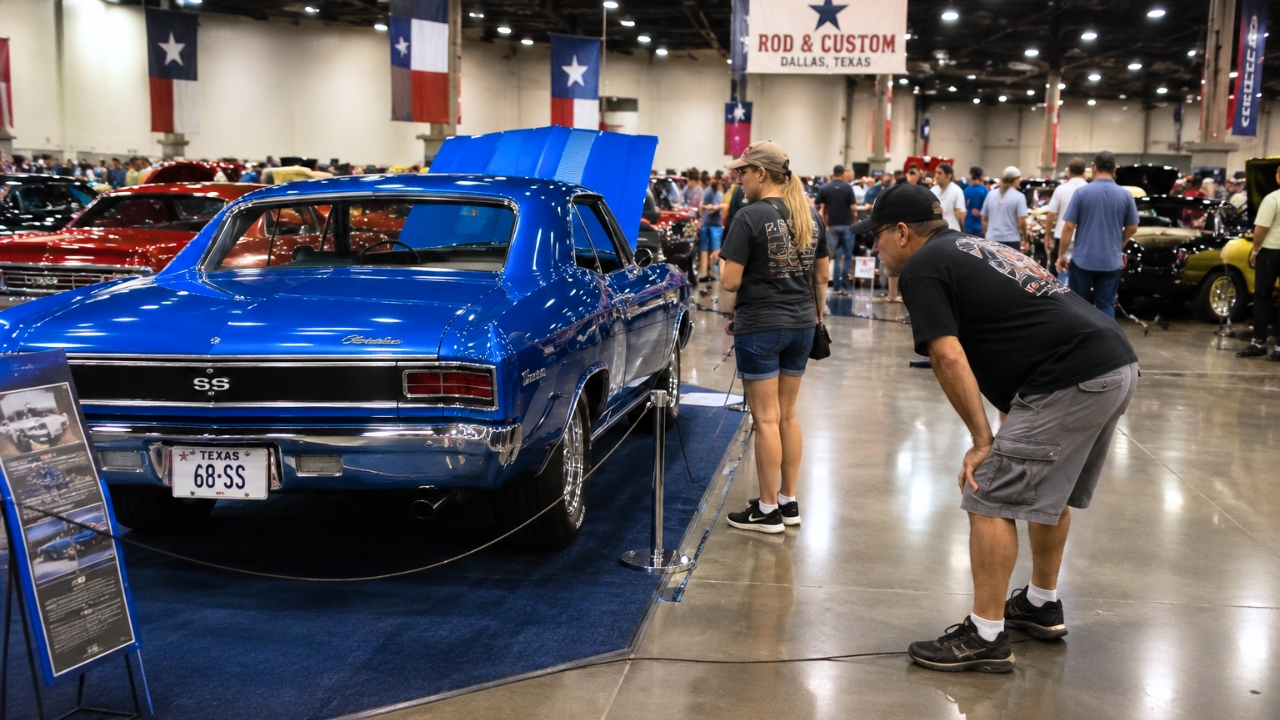
At a big outdoor show, you may be walking long distances across pavement, grass, or speedway grounds. At an indoor show like Houston Autorama, the experience is more controlled and weather is less of a concern. Summit Racing’s event calendar lists the 65th Annual Houston AutoRama for November 26 through November 29, 2026, at the George R. Brown Convention Center in Houston.
That brings up the second thing first-time visitors should know: dress for the event, not just the photos.
Comfortable shoes matter. A lot.
You may think you are just going to stroll around for an hour, but a good show can keep you walking longer than expected. If the event is outdoors, bring sunscreen, sunglasses, water, and a hat. Texas heat can sneak up on you, even when the day starts mild. If the show is during spring or fall, bring a light jacket anyway because Texas mornings and evenings can feel completely different from the afternoon.
If you are bringing kids, plan for breaks.
A car show can be exciting for children, but it can also involve crowds, noise, heat, and a lot of standing around. Look ahead to see whether the event has food vendors, shaded areas, restrooms, seating, or nearby places to cool off. A little preparation can be the difference between a fun family outing and a long day of complaints.
Another simple rule: do not touch the cars unless the owner clearly allows it.
That may sound obvious, but it is worth saying. Many show vehicles have thousands of dollars and hundreds of hours invested in paint, chrome, glass, trim, wheels, interiors, and engine work. Even leaning on a vehicle, placing a hand on the paint, or letting a child climb onto a running board can cause problems.
Most owners are friendly. Many are proud to answer questions. But respect comes first.
Ask before taking close-up pictures of interiors, engine compartments, or custom details if the owner is nearby. Most will not mind, but asking is polite. It also opens the door to a conversation, and that is often where the best part of a car show begins.
The stories matter.
You may find out a truck belonged to someone’s grandfather. You may hear that a car was restored after sitting in a barn for 20 years. You may meet someone who drove several hours just to bring a vehicle to the show. Those conversations are what turn a row of parked cars into something memorable.
First-time visitors should also understand that not every car has to be perfect to be interesting.
Some vehicles are show-quality builds with flawless paint and spotless engine bays. Others are works in progress. Some still have rough edges, older repairs, or unfinished details. That does not make them less worth seeing. In many ways, project cars are more relatable because they show the process instead of only the finished result.
If you are going to a themed event, know what kind of vehicles to expect. Austin’s Lonestar Round Up, for example, describes itself as a huge outdoor car show and live music festival featuring vintage hot rods, custom cars, and live music at the Travis County Expo Center. That is a different experience from an exotic car meet or a modern auto show.
The type of show affects the whole feel of the day.
A vintage hot rod show may have live music and a retro atmosphere. A truck show may be louder and more focused on suspension, stance, paint, wheels, and custom interiors. A classic cruise-in may feel more laid-back. An indoor Autorama-style show may feel polished and display-heavy. A local charity show may feel relaxed, friendly, and community-driven.
None of those is better than the others. They are just different.
Food and parking are worth checking ahead of time too. Some big events have official parking areas and on-site food. Smaller shows may rely on nearby restaurants or food trucks. If the event is in a downtown square or busy district, parking can fill up faster than expected.
Cash can also be useful.
Many vendors take cards, but small events, raffles, charity booths, food stands, or swap meet sellers may still prefer cash. Having a little on hand can save you trouble.
For anyone taking photos, be patient. Car shows can be crowded, and it may take a minute to get a clean shot without people walking through. Early arrival can help, especially if you want pictures before the busiest part of the day.
It is also smart to walk the whole show once before deciding what you want to photograph closely. Sometimes the best vehicle is not near the entrance. It might be tucked into a back row, parked under a tree, or sitting quietly beside something louder and flashier.
That is part of the fun.
A good car show rewards people who slow down.
The biggest mistake a first-time visitor can make is treating it like a quick checklist. See the red Camaro. See the lifted truck. See the old Corvette. Leave.
That misses the point.
Take your time. Read the display cards. Ask a few questions. Notice the details. Look at the interiors. Pay attention to the paintwork. Listen when an owner starts telling you where the car came from.
Texas car shows are at their best when they feel like a conversation between generations. Older visitors remember what certain vehicles meant when they were new. Younger visitors bring fresh energy and new styles. Builders trade ideas. Families make memories. Strangers end up talking like old friends because one car reminded them of another time.
That is what a first-time visitor should really know.
You do not have to be an expert to enjoy a Texas car show.
You just have to show up curious, respectful, and ready to walk a little farther than you planned.

Arlie Howard contributes coverage on consumer issues, family-focused stories, household concerns, scams, local cost-of-living topics, and real-life situations that affect Texas readers.
Her work focuses on explaining what happened clearly and helping readers understand the details that may matter most.