Texas Deputies Arrest Registered Sex Offender After YouTuber’s Online Decoy Operation
A Liberty County arrest is getting attention across Texas because of how the case began.
According to the Liberty County Sheriff’s Office, deputies arrested a 54-year-old registered sex offender after an investigation that involved a YouTube channel known for online decoy operations targeting alleged sexual predators.
The case has the kind of details that make people pause: a YouTuber posing as a minor, a registered sex offender, a burner phone, and investigators trying to sort through what evidence can actually hold up in a criminal case.
The Houston Chronicle reported on the Liberty County case here: https://www.houstonchronicle.com/news/houston-texas/trending/article/liberty-county-youtube-22291025.php
According to the Chronicle, the investigation involved the YouTube channel PredatorPoachers, which is known for confronting people it believes are trying to communicate with minors online. In this case, the channel’s creator allegedly posed as a minor while communicating with Robert Lee Parker.
The Liberty County Sheriff’s Office said in a June 3 information release that the agency received information involving an alleged online solicitation situation. Investigators reviewed material connected to the online interaction, then continued looking into the case.
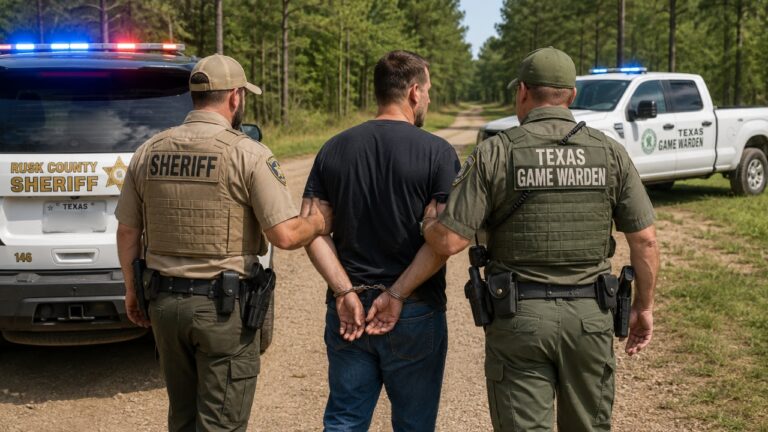
Authorities later arrested Parker after obtaining a warrant tied to alleged sex offender registration violations.
That distinction matters.
The public may hear “online predator sting” and assume the arrest was automatically for the alleged online communication itself. But cases like this can be more complicated. Law enforcement has to determine what evidence exists, whether it was collected properly, what device was used, who had access to it, what messages can be verified, and whether the facts meet the legal requirements for specific charges.
That is where this case took another turn.
According to the Houston Chronicle’s report, investigators were given a device described as a “burner phone,” rather than the original device allegedly used in the online communication. Detectives reportedly found limited evidence at first connected to the alleged offense. But while they continued investigating, they found Parker was a registered sex offender and allegedly had not used the same social media usernames and email addresses he had provided to local law enforcement.
For registered sex offenders, those details are not minor paperwork issues.
Texas law requires people on the sex offender registry to report certain information to authorities, including changes that may involve residence, employment, vehicles, phone numbers, online identifiers, and other reportable details. The Liberty County Sheriff’s Office has a sex offender registration page that notes registrants must report in person and make changes to home and work addresses, vehicles, telephone numbers, and other reportable changes.
In this case, the sheriff’s office said Parker had a prior conviction and was required to register as a sex offender. The alleged issue was not just that he communicated online. Authorities said he allegedly used online information that was not registered with law enforcement.
That is the part that led to the warrant.
For parents, the story is disturbing because it touches on a fear many families already have: adults using online platforms to reach children. Phones, social media accounts, gaming apps, messaging platforms, and private chats can make it difficult for parents to know who is really talking to their kids.
But the case also raises another issue: what happens when private citizens or online groups try to expose alleged predators themselves.
Predator-style YouTube operations often attract attention because they seem direct. Someone poses as a minor, talks to an adult online, records the interaction, and posts or shares the material. Viewers may see that and immediately want an arrest. But law enforcement has to work within evidence rules, criminal procedure, and constitutional limits.
That can be frustrating for the public, especially when the allegations involve children. But it is also why police and sheriff’s offices often warn that citizen-led operations can create challenges. If evidence is not preserved correctly, if original devices are not available, or if the online interaction cannot be verified clearly, prosecutors may have a harder time bringing certain charges.
The Liberty County Sheriff’s Office acknowledged that tension in the case. According to the Chronicle, Capt. John Bennett said the agency takes allegations involving potential child exploitation seriously, while also emphasizing the need for a thorough investigation to verify facts and meet legal requirements before charging decisions are made.
That is the careful line investigators have to walk.
On one side, there is public outrage and concern. On the other, there is the reality that a criminal case has to be built in a way that can survive court.
For Liberty County residents, the case is also a reminder that sex offender registration rules are not just a formality. Those rules exist so law enforcement can track where registered offenders live, how they can be contacted, and what online identities they may be using. When someone allegedly fails to keep that information current, investigators may treat it as a serious public safety issue.
The sheriff’s office said the investigation is still ongoing.
That means more information could come later, especially as authorities continue reviewing devices, messages, accounts, and the circumstances around the online interaction.
For now, the case stands out because it is not a simple “YouTuber catches suspect” story. It is stranger and more complicated than that.
It is a case where an online decoy operation got law enforcement’s attention, but investigators still had to dig for legally usable evidence. It is a case where a burner phone allegedly became part of the problem. And it is a case where the arrest ultimately centered on sex offender registration compliance, not just the viral-style confrontation that brought the allegations to light.
That is what makes it such a Texas crime story right now: part internet sting, part sheriff’s investigation, part public safety warning, and part reminder that what looks obvious online still has to be proven in the real world.

Arlie Howard contributes coverage on consumer issues, family-focused stories, household concerns, scams, local cost-of-living topics, and real-life situations that affect Texas readers.
Her work focuses on explaining what happened clearly and helping readers understand the details that may matter most.