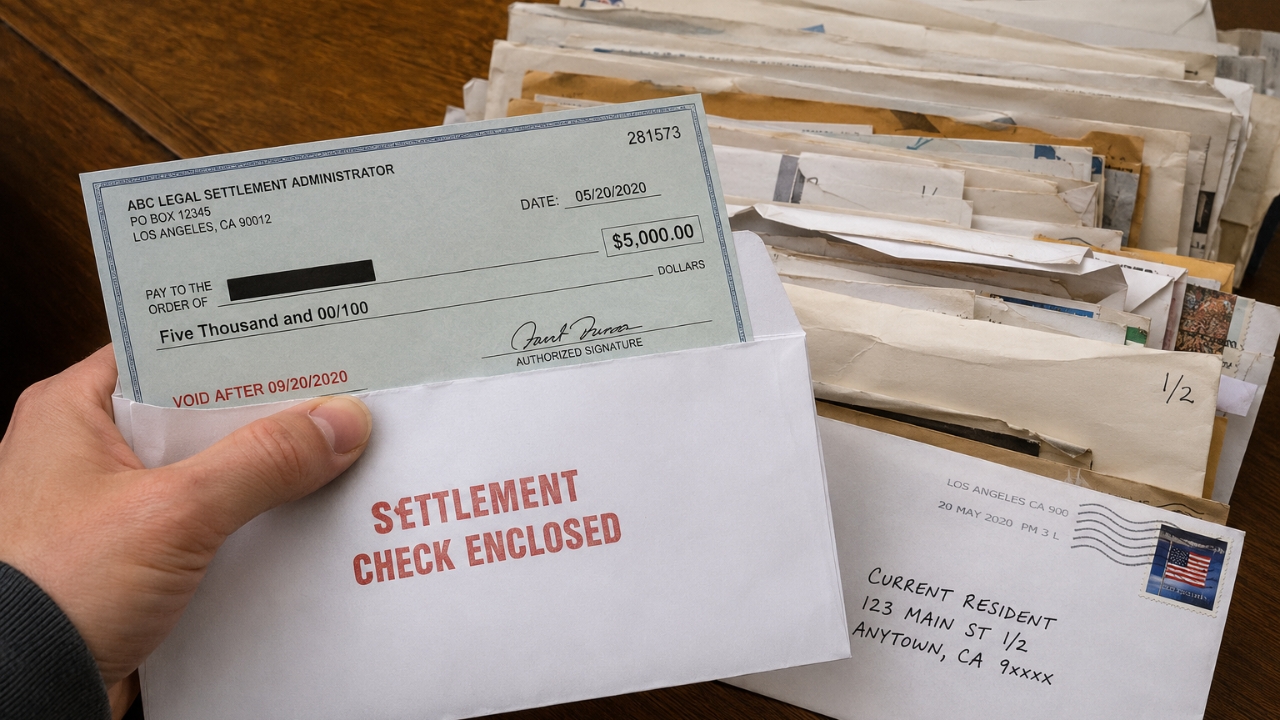
Tenant Says Neighbors Hoarded His Mail for a Year — Then He Found an Expired $5,000 Settlement Check
A California tenant says he knew his mail situation was not perfect, but he did not realize how expensive that problem could become until a pile of old envelopes finally appeared in his mailbox.
He lived in a rental house that had been split into two separate units. Because of that, his address included a “1/2” attached to the regular house number. It was the kind of setup that can easily confuse deliveries, especially if a sender leaves off part of the address or if a carrier is moving quickly.
So mail sometimes went to the wrong unit.
That alone was annoying, but not unusual. In shared houses, duplexes, converted rentals, and back units, people sometimes have to walk a stray letter next door or write “wrong address” on an envelope and put it back out.
But according to the tenant, the neighbors did not just receive one misdelivered letter and pass it along late.
He said they appeared to have held onto his mail for about a year.
The situation came to a head when the other tenants were moving out. Around that time, the poster suddenly received old mail that should have reached him much earlier. Mixed in with old bills was something far more serious: a settlement check.
At first, finding the check probably should have been good news. It was connected to a lawsuit involving a former employer. The poster later explained that he had not personally brought the lawsuit. His name had been included because he worked for the company during a period when, according to him, there had been questionable pay practices.
So he had not been waiting by the mailbox for a settlement check. He did not know one was coming.
That made the discovery even more frustrating.
When he opened the letter, he realized the check was from May 2020. The deadline to deposit it was September 2020. By the time the mail finally reached him, that deadline had long passed.
The check was worth $5,000.
He described the issue in a Reddit post and asked what options he had. From his point of view, the neighbors had cost him real money by sitting on mail that was clearly not theirs. He wanted to know whether small claims court was his only route, or whether there was another way to hold them responsible.
The situation put him in a difficult position because it was not necessarily clear what had happened inside the neighbors’ unit.
Maybe they deliberately ignored his mail. Maybe they tossed it into a pile and forgot about it. Maybe they only found it while packing to move. But the result was the same: bills and a $5,000 check reached him far too late.
The tenant seemed angry, but not eager to destroy the neighbors’ lives over it.
In a comment, he said he did not think they were “bad people,” just irresponsible young adults. He guessed one of them may have set the mail aside and forgotten about it until they cleaned for the move. Still, he made it clear that if he could not recover the money another way, he was prepared to hold them responsible.
That created the main tension of the post.
Was this a neighbor dispute? A civil claim? A mail issue? A problem for the settlement company? Or all of the above?
The tenant’s first instinct was that the neighbors had caused the loss. After all, if they had delivered the mail when they received it, he could have deposited the check on time. But commenters quickly pointed out that suing them might not be simple.
The neighbors could say they did not notice the mail until they moved. They could say it was mixed with junk mail. They could say the delivery mistake was not their fault. And unless the tenant could prove they knowingly withheld it, a court case could become complicated.
At the same time, many people told him not to assume the money was gone.
Even though the letter said the check had to be deposited by a certain date, commenters said companies and settlement administrators sometimes reissue checks, especially when the original check was never cashed. The practical first step, they said, was to contact the settlement company or law firm and explain exactly what happened.
The tenant initially seemed doubtful because the letter appeared to say that missing the deadline meant forfeiting the settlement. But people pushed him to call anyway. The worst they could say was no. The best outcome was that the check could be reissued and the neighbor issue would become less urgent.
He eventually updated the post to say that he would contact the settlement company first. If that failed, he would consider legal action.
There was also a mail-security angle.
Some commenters urged him to contact the post office or the Postal Inspection Service, especially because withholding someone else’s mail can become a serious issue. Others were more cautious, noting that misdelivered mail can create gray areas if the neighbors truly did not realize what they had.
The tenant also had to think about future prevention. His address format had already caused confusion, and this incident showed how badly things could go wrong when important mail disappeared into the wrong unit. Commenters suggested clearer mailbox labels, signing up for USPS Informed Delivery, and making sure the address was written correctly everywhere.
By the end, the tenant was not just dealing with a missing check. He was dealing with the realization that a small address problem, combined with careless neighbors, may have delayed bills and a major payment for months.
What commenters said
Most commenters told him to start with the settlement administrator or law firm, not the neighbors. Their reasoning was that if the check had never been cashed, there was at least a chance it could be reissued. Some said expiration dates on checks are sometimes used for accounting purposes and do not always mean the money is permanently lost.
Others suggested checking California’s unclaimed property system, though one commenter noted that the timeline might be too short for the money to appear there yet.
Several people urged him to report the issue to the local post office or USPS inspectors. They said that if mail was knowingly withheld, it could be treated as more than a casual neighbor problem.
There was disagreement over whether suing the neighbors would work. Some commenters thought he could try small claims court for the lost money and late fees connected to old bills. Others said that would be hard to win unless he could prove the neighbors intentionally held the mail and knew it belonged to him.
A few commenters focused on prevention. They recommended signing up for Informed Delivery, labeling the mailbox more clearly, and making sure every sender used the full address with the “1/2” included.
The strongest practical advice was simple: call the settlement company first, ask whether the check was ever deposited, and request a reissue before turning the neighbor mistake into a legal fight.

Grady Howard contributes coverage on Texas public-interest stories, household costs, transportation, weather-related concerns, safety alerts, and consumer topics.
His reporting is built around practical context — what changed, why it matters, and what readers should pay attention to next.