Two Rare Sea Turtles Washed Ashore on the Texas Coast Within Days of Each Other
Texas beachgoers are used to seeing plenty of strange things wash up along the coast.
Seaweed. Driftwood. Jellyfish. Fishing line. Plastic bottles. The occasional mystery object that makes everybody stop and stare.
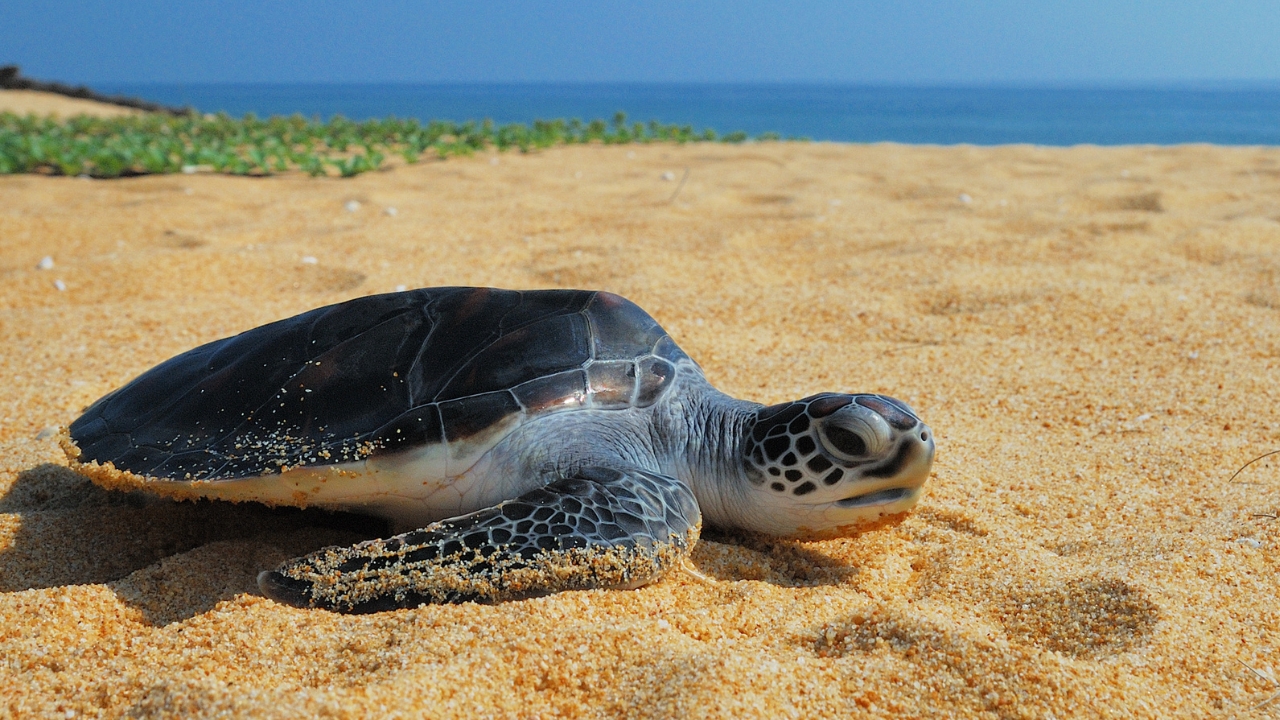
But in late May, rescuers were dealing with something much more serious: two rare hawksbill sea turtles found stranded along the Texas coast within days of each other.
According to Chron, one juvenile hawksbill sea turtle was found on Bolivar Peninsula after a woman noticed it tangled in seaweed and realized something was wrong. Instead of trying to handle the turtle herself, she contacted the Gulf Center for Sea Turtle Research, which is exactly what officials want people to do in that situation.
That turtle was not the only one.
Just days earlier, another hawksbill had been found on Galveston Island. That one was already passing large amounts of plastic debris, according to the same report. That detail is heartbreaking because it turns a rare wildlife rescue into a reminder of what human trash can do once it reaches the Gulf.
Hawksbill sea turtles are not something most Texas beachgoers ever see. They are federally endangered and considered one of the rarest sea turtles along the Texas coast. So finding one stranded is unusual. Finding two in the same general stretch of time is the kind of thing that gets marine researchers’ attention.
Christopher Marshall, a marine biologist with Texas A&M University at Galveston, told Chron that these strandings were especially notable because they involved larger juvenile hawksbills, not tiny hatchlings. He suspected recent storms and heavy sargassum buildup may have played a role by disrupting the turtles’ floating habitat.
That seaweed can be important for young turtles. It gives them cover, food, and a place to drift as they grow. But when weather pushes large mats of seaweed onto shore, turtles can get caught up in the mess too.
The plastic issue is another problem altogether.
A young turtle passing plastic is not just sad. It is dangerous. Plastic can block digestion, cause internal injury, make animals weak, and reduce their chances of surviving in the wild. From a distance, bits of plastic can look like food. Once swallowed, they become a problem the turtle cannot solve on its own.
The Gulf Center for Sea Turtle Research has urged beachgoers to be careful around seaweed piles and to report stranded turtles rather than picking them up or trying to move them. That is important because even a well-meaning person can accidentally make things worse.
A sick or stranded sea turtle needs trained help. It may be dehydrated, injured, overheated, tangled, or too weak to return to the water. Putting it back in the Gulf may feel like the right thing to do, but if the animal is already in poor condition, that can rob rescuers of the chance to treat it.
Both turtles were reportedly taken for care, with the hope that they can eventually recover and be released.
There is something powerful about a story like this because it is not loud or dramatic in the way people usually expect from “crazy Texas news.” There are no police chases, no escaped kangaroos, no giant alligator blocking a road.
Just two rare turtles, pushed into trouble along the coast, and the people who noticed in time to help.
For Texans heading to the beach this summer, the lesson is simple. Watch where you step. Be careful around seaweed piles. Do not leave trash behind. And if something looks wrong with a sea turtle, call the experts instead of trying to become the rescue crew yourself.
Because sometimes the strangest thing on the beach is also the one that needs help the most.
Grady Howard contributes coverage on Texas public-interest stories, household costs, transportation, weather-related concerns, safety alerts, and consumer topics.
His reporting is built around practical context — what changed, why it matters, and what readers should pay attention to next.