Texas Homeowners Should Check These Snake Hiding Spots Around the House
Most Texas homeowners know snakes are out there somewhere.
They may be in the pasture, near the creek, along a fence line, under a brush pile, or crossing a warm road after the sun starts dropping. But the unsettling part is when they show up close to the house.
That is when a snake stops feeling like “nature” and starts feeling personal.
The truth is, snakes do not usually come around a home because they want to bother people. They show up because the property offers something useful: cover, shade, moisture, food, or a quiet place to hide. In Texas, where warm weather can stretch for a good part of the year, those hiding spots can be easier to create than many homeowners realize.
Texas Parks and Wildlife advises homeowners to keep lawns trimmed low and remove brush, wood, rock, and debris piles because those areas make good hiding places for snakes and for rodents, which snakes eat. Their venomous snake safety guidance is available here: https://tpwd.texas.gov/education/resources/texas-junior-naturalists/be-nature-safe/venomous-snake-safety
So before snake season catches you off guard, it is worth walking around the outside of your home with fresh eyes.
Start With the Garage
The garage is one of the first places to check.
A garage can be dark, quiet, cluttered, and full of corners where a snake can stay hidden. If the garage door does not seal tightly at the bottom, small animals can slip inside. A snake may follow prey, escape heat, or take shelter under shelves, boxes, tools, or stored equipment.
That does not mean every Texas garage has a snake problem. But it does mean homeowners should be careful before reaching behind storage bins, moving old cardboard boxes, or walking barefoot into a dark garage at night.
A good rule is simple: turn on the light, look before stepping, and keep clutter off the floor where possible.
Look Around Woodpiles and Firewood Racks
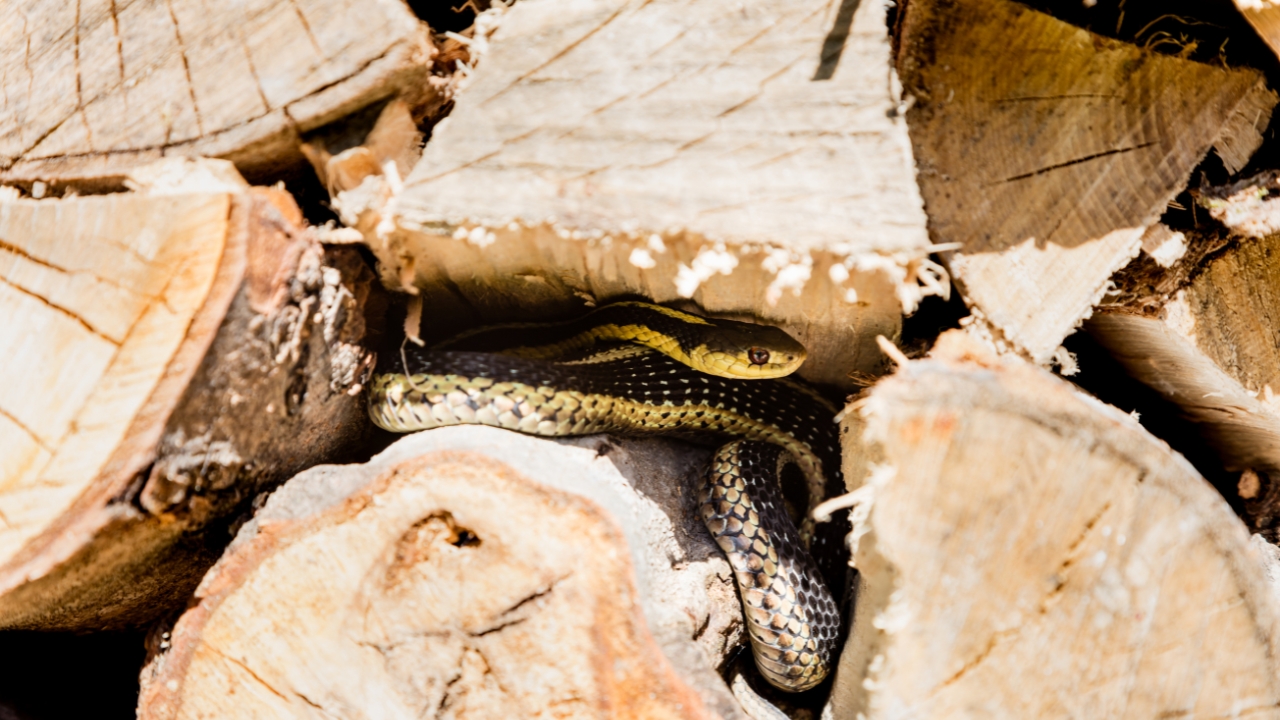
Firewood is useful, but it can also make a fine hiding place.
Stacked wood creates small, protected spaces where snakes, rodents, insects, and lizards may all find shelter. In cooler weather, snakes may use protected spaces to avoid the cold. In hot weather, shaded woodpiles can offer relief from the sun.
If you keep firewood, store it away from the house when possible. Raising it off the ground can also help reduce hiding spots underneath. Before picking up logs, especially ones that have been sitting for weeks or months, use gloves and pay attention.
The CDC’s National Institute for Occupational Safety and Health advises outdoor workers to avoid climbing on rocks or piles of wood where a snake may be hiding and to wear leather gloves when handling brush and debris. Their guidance is here: https://www.cdc.gov/niosh/outdoor-workers/about/venomous-snakes.html
That is good advice for homeowners too.
Check Brush Piles, Leaf Piles, and Yard Debris
Brush piles are one of the easiest snake shelters to accidentally create.
Tree limbs after a storm, leftover landscaping debris, bags of leaves, piles of weeds, and old branches stacked near the fence can all become cover. They may also attract insects and rodents, which can make the spot even more appealing to snakes.
Texas A&M AgriLife recommends taking a habitat approach to reducing snake encounters, including cutting grass, removing brush and debris, and trimming lower branches on bushes and trees. You can read their guidance here: https://stories.tamu.edu/news/2020/06/18/snakes-are-out-in-texas-heres-how-to-reduce-encounters-with-them/
That is one of the most practical things a Texas homeowner can do. You are not trying to make your yard sterile. You are trying to remove the easy shelter that invites wildlife too close to the house.
Watch the Space Under Sheds
The area under a backyard shed can be a perfect hiding spot.
It is shaded. It is protected. It may be cooler than the open yard. If there are gaps underneath, snakes may use that space the same way rodents, rabbits, or other small animals might.
This is especially worth checking if the shed sits near tall grass, a fence line, stacked materials, or a quiet corner of the yard that does not get much activity.
Do not stick your hand under a shed to check. Use a flashlight from a safe distance. If you see repeated snake activity around the shed, consider blocking access points with appropriate materials after making sure no animals are trapped inside.
Pay Attention to Rock Borders and Landscaping
Rock landscaping is popular in Texas because it can handle heat and does not need the same care as grass. But rock borders, stacked stones, retaining walls, and decorative boulders can also create hiding places.
Small gaps between rocks can shelter snakes and the animals they eat. Areas with thick plants, mulch, and rocks together can be especially attractive because they offer cover and food sources.
This does not mean homeowners need to rip out every flower bed or rock border. It does mean they should keep landscaping maintained, avoid letting weeds take over, and be careful when reaching into dense areas.
Use tools before hands. Wear gloves. Watch where you step.
Do Not Ignore Tall Grass Along Fence Lines
A neatly mowed center lawn can still have snake-friendly edges.
Fence lines are easy to overlook. Grass grows high along the boards. Weeds collect in corners. Leaves pile up where the wind pushes them. If there is a gap under the fence, snakes and rodents may move back and forth through that area.
Texas Parks and Wildlife specifically recommends keeping the lawn around your home trimmed low. That includes the edges, not just the easy middle section of the yard.
If you have a back fence near a pasture, creek, wooded lot, ditch, or undeveloped property, those edges deserve extra attention.
Look Near Water Sources
Snakes need water, and some Texas snakes are commonly found near it.
Ponds, creeks, drainage ditches, irrigation leaks, birdbaths, pet water bowls, and low wet areas can all draw wildlife. Around water, homeowners may also see frogs, insects, rodents, and other small animals that can become prey.
This is especially important in areas with cottonmouths, also called water moccasins. Not every snake near water is venomous, and many harmless water snakes are mistaken for cottonmouths. But if you cannot identify a snake from a safe distance, it is best to leave it alone.
Fix leaks when you can. Avoid leaving unnecessary standing water near the house. Be careful around pond edges, creek banks, and drainage areas, especially when visibility is poor.
Check Around Porches, Steps, and Crawl Spaces
Snakes like protected spaces, and the areas around porches and steps can provide them.
Gaps under porch steps, openings around skirting, loose boards, crawl space access points, and spaces near foundations can become shelter. If rodents are getting into those areas, snakes may follow.
Walk the perimeter of your home and look for gaps. Pay attention to places where pipes, wires, vents, or old repairs leave openings. Sealing entry points can help with more than snakes. It can also reduce problems with rodents, insects, and other wildlife.
Be Careful With Outdoor Storage
Lawn equipment, tarps, patio cushions, buckets, unused planters, children’s toys, and garden supplies can all create hiding spots when left outside.
A snake does not need a large space. It needs cover. Something as simple as a tarp folded beside the fence or a stack of empty pots near the patio can provide that.
Before moving anything that has been sitting for a while, lift it carefully and keep your body back. Better yet, store items off the ground or inside sealed containers when possible.
The Smartest Texas Snake Strategy Is Prevention
No yard can be guaranteed snake-free. This is Texas, and snakes are part of the landscape.
But homeowners can make their property less inviting.
Keep grass trimmed. Clear brush and debris. Store wood properly. Reduce rodents. Seal gaps. Fix leaks. Keep pet food and birdseed cleaned up. Use a flashlight at night. Wear shoes outside. Teach children not to touch snakes.
And when you see a snake, do not try to prove anything. Most bites happen when people try to handle, kill, or move snakes themselves. Give the snake room, keep children and pets away, and call animal control or a trained wildlife removal professional if the snake is inside the home or too close for comfort.
Texas homeowners do not need to live scared. But they do need to stay aware.
A careful walk around the yard today can prevent a nasty surprise tomorrow.

Grady Howard contributes coverage on Texas public-interest stories, household costs, transportation, weather-related concerns, safety alerts, and consumer topics.
His reporting is built around practical context — what changed, why it matters, and what readers should pay attention to next.