When Texas Homeowners Should Be Most Alert for Snake Activity
Snake season in Texas does not always follow a neat calendar.
That is one of the first things homeowners should understand. Texas is too big, too warm, and too weather-dramatic for one simple rule to cover the whole state. A homeowner in East Texas may deal with different conditions than someone in the Hill Country, North Texas, the Panhandle, South Texas, or along the Gulf Coast.
Still, there are certain times when Texans should be more alert.
Snakes become more active when temperatures rise, when food is available, when rain changes their habitat, and when people spend more time outdoors. Texas A&M AgriLife says snakes typically begin appearing in search of food and shelter during February to March as temperatures warm. Their spring snake safety guidance is here: https://agrilifetoday.tamu.edu/2025/03/12/five-ways-to-prevent-negative-encounters-with-snakes-this-spring/
That does not mean every snake is dangerous. Texas Parks and Wildlife says Texas has more than 105 species and subspecies of snakes, but only 15 are potentially dangerous to humans. TPWD’s venomous snake safety page is here: https://tpwd.texas.gov/education/resources/texas-junior-naturalists/be-nature-safe/venomous-snake-safety
The smart Texas homeowner does not panic. They simply know when to pay closer attention.
Be Alert When Temperatures Start Warming in Late Winter and Spring
In much of Texas, snake awareness needs to begin before summer.
As temperatures rise in late winter and spring, snakes that have been less active during colder weather may begin moving again. They may be looking for food, shelter, mates, or warmer places to rest.
That can surprise homeowners who think of snakes as a strictly summer problem.
February and March can be the start of increased snake activity in parts of Texas, especially during warm stretches. By April and May, more homeowners may notice snakes near yards, trails, barns, sheds, creeks, and roads.
Texas A&M AgriLife has also noted that snakes become more active as spring temperatures climb. You can read that guidance here: https://agrilifetoday.tamu.edu/2023/04/20/snakes-are-out/
For homeowners, spring is a good time to clean up the yard before activity picks up. Mow early. Clear brush. Remove old leaves. Check around woodpiles. Seal gaps around sheds and garages. Do not wait until the first snake sighting to start thinking about prevention.
Watch Closely During Warm Days After Cool Weather
Texas weather has a habit of swinging from cold to warm quickly.
After a cold spell, a sunny warm day can bring snakes out to bask or move around. Snakes cannot generate their own body heat the way people do, so they use the environment to regulate their temperature.
Texas A&M AgriLife explains that snakes prefer sun and may stretch out on warm surfaces such as rocks, pavement, and other heat-retaining areas. Their guidance on reducing snake encounters is here: https://agrilifetoday.tamu.edu/2021/05/21/snakes-are-out-reduce-encounters/
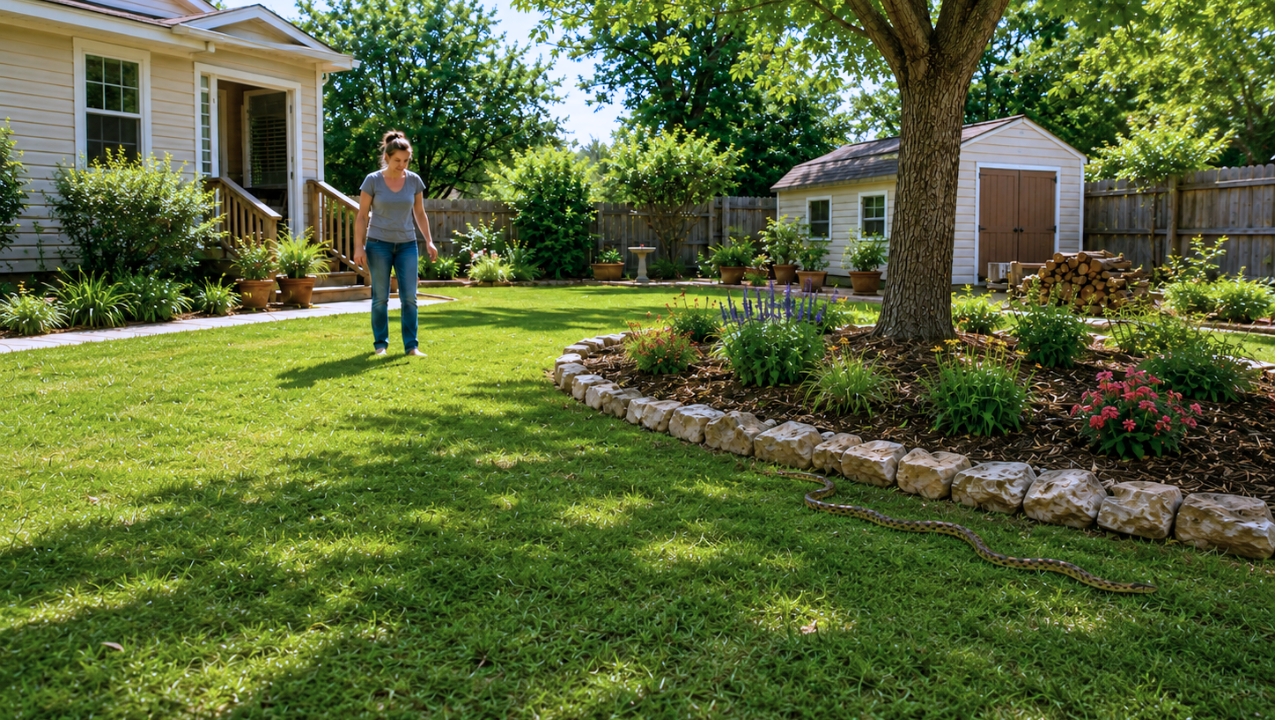
That means homeowners should be careful around driveways, sidewalks, patios, stone borders, retaining walls, and warm roads, especially after a cool night or chilly weather pattern.
A snake on warm pavement is not trying to bother anybody. It may simply be warming up. But that can still put it close to where people walk, park, or let pets outside.
Pay Attention in Early Morning, Evening, and Night During Hot Weather
During extreme Texas heat, snakes may avoid the worst part of the day.
Texas Parks and Wildlife notes that snakes avoid extremely hot conditions and may limit activity in hot climates to early morning, evening, and nighttime. TPWD’s snake FAQ is available here: https://tpwd.texas.gov/education/resources/texas-junior-naturalists/snakes-alive
That matters for homeowners in July, August, and other hot stretches.
The middle of the afternoon may be too hot for much snake movement in some areas, but activity can pick up when temperatures become more comfortable. That means dusk dog walks, early-morning gardening, nighttime trash runs, and late trips to the garage deserve extra attention.
Use a flashlight after dark. Wear shoes outside, even for a quick errand. Keep dogs on a leash when walking near tall grass, creek banks, drainage ditches, or wooded edges.
A lot of snake safety comes down to seeing the snake before you are too close.
Be More Careful After Heavy Rain or Flooding
Heavy rain can move wildlife around.
When low areas flood, snakes may leave burrows, brush, creek banks, drainage ditches, or other hiding places in search of higher, drier ground. That may bring them closer to porches, garages, sheds, patios, and yards.
Texas A&M AgriLife has a resource on snakes and flooding that explains floods can cause snakes and other wildlife to leave affected areas while looking for a new home. You can find it here: https://agrilifeextension.tamu.edu/asset-external/snakes-and-flooding/
After heavy rain, homeowners should be careful when cleaning up storm debris, moving branches, opening sheds, or walking near drainage areas.
Flooding can also move rodents and insects, which may attract snakes looking for food. If the storm left debris piled against the fence or washed brush into the yard, clean it up as soon as it is safe to do so.
Stay Alert During Yard Cleanup and Landscaping Projects
One of the most common times to accidentally encounter a snake is when you are doing exactly what responsible homeowners do: cleaning up.
Moving firewood. Pulling weeds. Clearing brush. Picking up storm debris. Cleaning the shed. Trimming shrubs. Reaching behind flowerpots. Dragging old boards from the side of the house.
Those are all moments when hands and feet end up near hiding places.
The CDC’s National Institute for Occupational Safety and Health recommends wearing boots, long pants, and gloves when working outdoors in areas where snakes may be present. It also advises people not to handle snakes and to avoid tall grass and piles of leaves when possible. The CDC/NIOSH guidance is here: https://www.cdc.gov/niosh/outdoor-workers/about/venomous-snakes.html
Texas homeowners should treat yard cleanup with the same caution.
Use a rake or long-handled tool before reaching into piles. Wear closed-toe shoes or boots. Do not stick your hands into holes, under boards, or behind stacked materials where you cannot see.
Be Careful Around Woodpiles, Brush Piles, and Rock Borders Year-Round
Some snake hiding spots are risky almost any time conditions are warm enough.
Woodpiles, brush piles, rock borders, stacked lumber, old bricks, tarps, and cluttered storage areas can all provide shelter. They can also attract rodents, insects, and lizards that snakes may eat.
Texas Parks and Wildlife recommends removing brush, wood, rock, and debris piles from around the home because they are good hiding places for snakes and rodents. That advice is not limited to one month of the year.
If a pile has been sitting untouched, treat it carefully. Even in cooler months, protected areas may still shelter wildlife.
Watch for Snakes When Rodents Are Active
Snakes follow food.
If you are seeing more mice or rats around the garage, shed, fence line, chicken coop, barn, trash area, or bird feeder, snakes may eventually follow. A yard with a rodent problem is more inviting to snakes than a yard without one.
The National Pesticide Information Center explains that snakes enter areas where people live in search of food and shelter. It recommends reducing food sources such as rodents by not leaving pet food outside and storing animal feed in tight containers. Their snake prevention page is here: https://npic.orst.edu/pest/snake.html
For Texas homeowners, this means snake prevention is also rodent prevention.
Clean up spilled birdseed. Secure trash. Store pet food and livestock feed properly. Do not leave pet food outside overnight. Seal gaps where rodents can enter.
If you reduce the food source, the yard becomes less attractive to snakes.
Be Extra Cautious Near Water in Warm Weather
Water changes the snake equation.
Ponds, creeks, lakes, drainage ditches, marshy areas, and low wet spots can all attract wildlife. In Texas, some snakes are commonly found near water, including nonvenomous water snakes and venomous cottonmouths.
Not every snake near water is a cottonmouth. In fact, many harmless water snakes are mistaken for them. But if you cannot identify a snake from a safe distance, treat it with caution and leave it alone.
Be careful when fishing, walking dogs near ponds, cleaning around drainage ditches, or letting children play near creek banks. Watch where you step and where you place your hands.
Do Not Forget Fall Snake Activity
Many people relax once summer starts fading, but fall can still bring snake activity in Texas.
Warm fall days may keep snakes moving. Cooler nights can send them toward warm surfaces. Yard cleanup, hunting season, football weekends, camping trips, and outdoor chores can all increase the chances of people and snakes crossing paths.
In some areas, snakes may also be moving as they prepare for colder weather.
That means homeowners should not put away the boots and caution just because September or October has arrived. If the weather is warm, snakes can still be active.
Know the Difference Between Awareness and Fear
Being alert does not mean being scared every time you walk outside.
Most snakes want nothing to do with people. Many are nonvenomous. Some are beneficial because they help control rodents and other pests. Texas Parks and Wildlife notes that snakes play an important role in the ecosystem, especially by helping control rodents. TPWD’s venomous Texas snakes page is here: https://tpwd.texas.gov/education/resources/texas-junior-naturalists/snakes-alive/venomous-texas-snakes
The goal is to respect them, not panic.
Look before reaching. Wear shoes outside. Keep the yard trimmed. Use a flashlight at night. Keep pets away from tall grass, debris piles, and creek banks. Teach children not to touch snakes, even if they look dead.
Those habits make a difference.
What To Do If You See a Snake
If you see a snake, give it room.
Do not try to grab it, kill it, pin it, or move it yourself. The CDC warns people not to handle snakes. Many bites happen when people get too close or try to interfere.
Move children and pets away. If the snake is outdoors and has a clear path to leave, let it leave. If it is inside the home, in the garage, near a doorway, in a pool area, or somewhere people or pets could easily get too close, call animal control or a trained wildlife removal professional.
If someone is bitten by a snake that may be venomous, seek medical help right away. Do not cut the wound, suck out venom, apply ice, or use a tourniquet.
Texas Snake Awareness Is Seasonal, But It Never Fully Goes Away
Texas homeowners should be most alert when temperatures start warming in late winter and spring, during warm days after cool weather, in early mornings and evenings during hot months, after heavy rain, and anytime they are cleaning up brush, wood, leaves, or clutter.
But the bigger lesson is simple.
Snakes are part of Texas. They are not always dangerous, and they are not usually looking for trouble. But they do deserve space and respect.
A homeowner who understands when snakes are most active is better prepared to avoid surprise encounters. In Texas, that kind of practical awareness is worth keeping all year long.

Grady Howard contributes coverage on Texas public-interest stories, household costs, transportation, weather-related concerns, safety alerts, and consumer topics.
His reporting is built around practical context — what changed, why it matters, and what readers should pay attention to next.