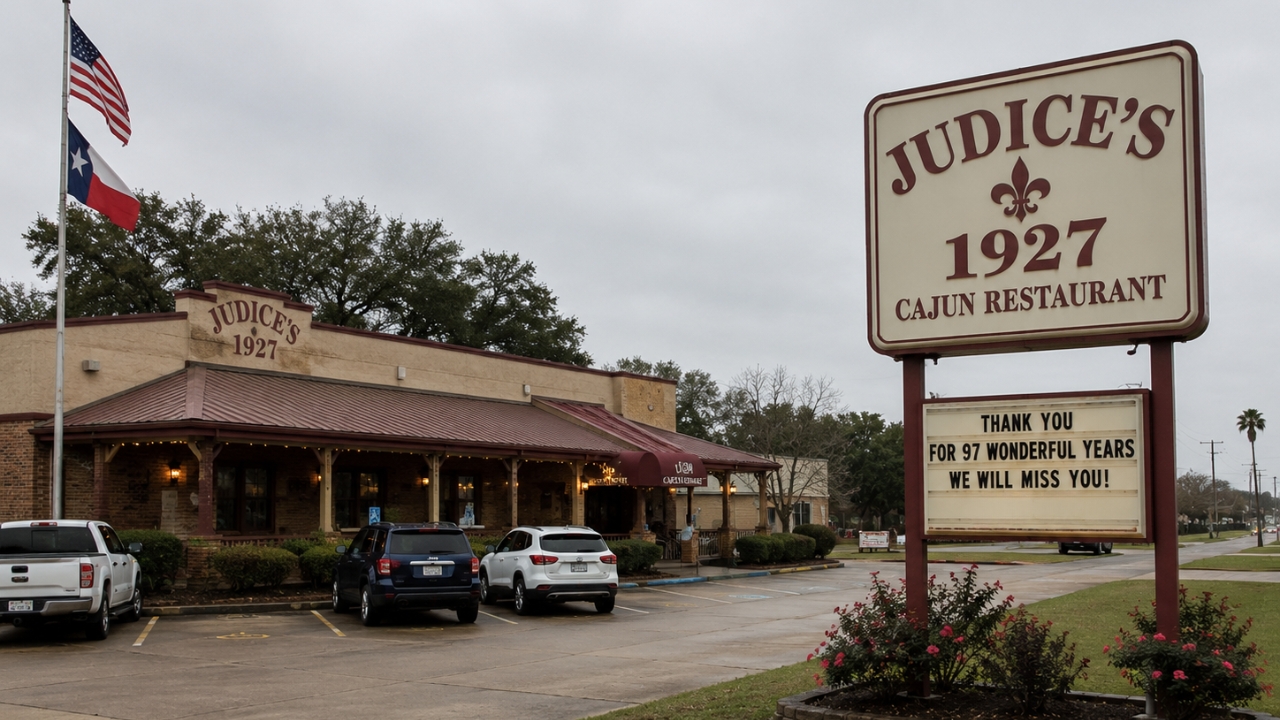
Beloved Southeast Texas Cajun Restaurant Closes Just Shy of 100 Years
A Southeast Texas restaurant that carried nearly a century of family history has served its last meal.
Judice’s 1927 in Nederland has permanently closed, ending a restaurant chapter tied to one of the Golden Triangle’s longtime Cajun food families. According to the Beaumont Enterprise, owner Al Judice IV announced the closure Monday and cited rising labor, food, and supply costs as the reason the restaurant could not continue.
For regular customers, that is the kind of news that feels bigger than one business shutting its doors.
A restaurant like Judice’s is not just a place where people stop in for dinner. It becomes part of birthdays, after-church meals, family visits, date nights, business lunches, and the little routines that make a community feel familiar. When a place like that closes, people do not just miss the food. They miss the memories attached to it.
The Judice family’s Southeast Texas food story goes back to 1927, when the family arrived from Louisiana and brought Cajun recipes, culture, and traditions with them. KFDM reported that the family’s history began with a small grocery store in Port Arthur before expanding over the years into meat markets, restaurants, and prepared foods.
That is why the name carried weight in the area.
Judice’s 1927 was located on Nederland Avenue and had become known for Cajun cooking, seafood, gumbo, and the kind of family-food reputation that is hard to build and even harder to replace. The restaurant’s closure came just one year before the family hoped to reach the 100-year mark.
That part stings.
Most businesses never get anywhere close to a century. To fall just short after surviving changing tastes, storms, economic swings, and generations of customers makes the ending feel especially bittersweet.
In his announcement, Judice said the family had hoped to reach 100 years but still believed what they built was worth celebrating. The U.S. Sun reported that Judice described the restaurant as more than a place to eat, calling it a gathering place, a tradition, and a piece of home for many people.
That kind of statement may sound sentimental until you think about how restaurants actually function in small and midsize Texas communities.
People meet there after funerals. They celebrate Little League seasons there. They bring out-of-town family there because they want to show them what local food tastes like. They sit in the same booths, order the same dishes, and get used to seeing the same faces behind the counter.
Then one day, the sign on the door changes.
The closure also reflects a pressure many local restaurants have been talking about for years. Food costs have climbed. Labor costs have become harder to manage. Supplies, rent, insurance, utilities, and repairs all add up. Even beloved restaurants with loyal customers can struggle when the numbers stop working.
That is the part customers sometimes do not see.
A full dining room does not always mean a healthy bottom line. A popular menu item can still become difficult to price when ingredients keep getting more expensive. And a restaurant with history still has to survive present-day business conditions.
Judice’s 1927 had not been in its latest Nederland location for the full 99 years. The Beaumont Enterprise reported that the restaurant held a soft opening at 3520 Nederland Avenue in August 2019. But the name and family food legacy behind it went back much further, tied to the Judice family’s 1927 arrival and business roots in Southeast Texas.
The good news for longtime customers is that the Judice name is not disappearing entirely.
The family’s 1927 Meat Market on Nederland Avenue will remain open, according to the Beaumont Enterprise. That means part of the family business will continue even though the restaurant chapter has ended.
Still, losing the restaurant is a real blow for people who loved it.
Southeast Texas has a deep food identity, shaped by Cajun, Creole, Gulf Coast, Southern, and Texas influences. Places like Judice’s help carry that identity forward. They are part of how recipes, family stories, and local flavor survive from one generation to the next.
When one closes, the community loses a piece of its everyday history.
For the Judice family, the decision was clearly painful. For customers, it may feel sudden. And for anyone who has watched a longtime local restaurant disappear, it is another reminder that even the places that seem permanent are still vulnerable.
Ninety-nine years is an extraordinary run.
It just makes the ending, one year before 100, feel that much harder.

Arlie Howard contributes coverage on consumer issues, family-focused stories, household concerns, scams, local cost-of-living topics, and real-life situations that affect Texas readers.
Her work focuses on explaining what happened clearly and helping readers understand the details that may matter most.