Why McKinney Keeps Attracting Families Even as North Texas Gets More Expensive
McKinney is not the sleepy little place some longtime North Texans still picture in their heads. It is bigger, busier, and more expensive than it used to be. The roads feel more crowded, new neighborhoods keep stretching north, and the phrase “used to be cheaper” comes up a lot when people talk about Collin County.
And yet, families keep looking at McKinney anyway.
That says something. In a region where nearly every desirable suburb has gotten pricier, McKinney is still pulling people in because it offers a mix many families are chasing: good schools, newer homes, parks, shopping, a historic downtown, job access, and enough distance from Dallas to feel like a different pace without being completely disconnected from the metroplex.
The question is not whether McKinney is growing. It clearly is. The real question is why families still think the trade-off is worth it.
McKinney’s growth is not subtle anymore
The city’s own demographic data shows McKinney’s estimated population rising from 206,654 in 2022 to 237,130 in 2026. That is a lot of new neighbors in a short window, and anyone who has driven around the north side of town lately probably does not need a spreadsheet to believe it. (mckinneytexas.org)
The U.S. Census Bureau’s 2024 estimate put McKinney at 227,526 residents, up from a 2020 Census population of 195,308. That kind of jump helps explain why McKinney no longer feels like a far-out option. It has become one of the major players in the North Texas growth story. (census.gov)
Families are not just moving there because it has houses. They are moving there because the city has reached that point where daily life feels built out enough to be convenient, while still selling the idea of space, community, and a little breathing room.
The historic downtown gives McKinney something different
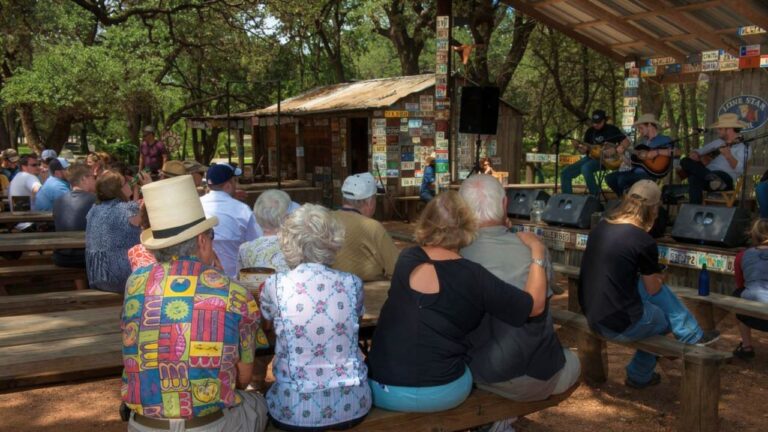
A lot of suburbs can offer rooftops, grocery stores, and chain restaurants. McKinney has something many newer-growth cities cannot fake as easily: a real downtown square with history, restaurants, boutiques, events, and that “let’s walk around for a while” feel.
Visit McKinney describes the city as about 30 miles north of Dallas and highlights its historic downtown, tree-lined streets, and creative community. That may sound like tourism copy, but it points to a real advantage. McKinney is not only selling new subdivisions. It has an older center of gravity. (visitmckinney.com)
For families, that matters. A place can have good houses and still feel like nowhere in particular. McKinney has enough identity that people can picture a Saturday there: breakfast downtown, a kids’ event, a walk around the square, errands, and then back home without feeling like every outing requires Dallas traffic.
Families want the North Texas job market without living in Dallas
McKinney benefits from its location. It sits far enough north to give families a more suburban feel, but it is still tied into the larger Collin County and Dallas-Fort Worth economy. For workers with jobs in Plano, Frisco, Allen, Richardson, Dallas, or hybrid office schedules, McKinney can look realistic enough.
That does not mean the commute is easy. Let’s not get cute about it. U.S. 75 can test a person’s sanctification before 8 a.m., and the drive into Dallas can feel very different depending on time, weather, construction, and wrecks. But for a lot of families, the commute is part of the trade-off they are willing to make for the house, school options, and community.
This is especially true for hybrid workers. If someone only drives south a few days a week, McKinney may feel more manageable than it would for a five-day commute into downtown Dallas.
The school conversation still matters
Schools are one of the biggest reasons families look north in the first place. McKinney ISD, nearby districts, private schools, charter options, and Collin College access all play into how parents evaluate the area.
Even when families are not picking a house only for schools, school reputation affects resale, neighborhood demand, and how fast certain areas move. Parents compare campuses, boundaries, programs, commute times, and sports or activity options before making decisions.
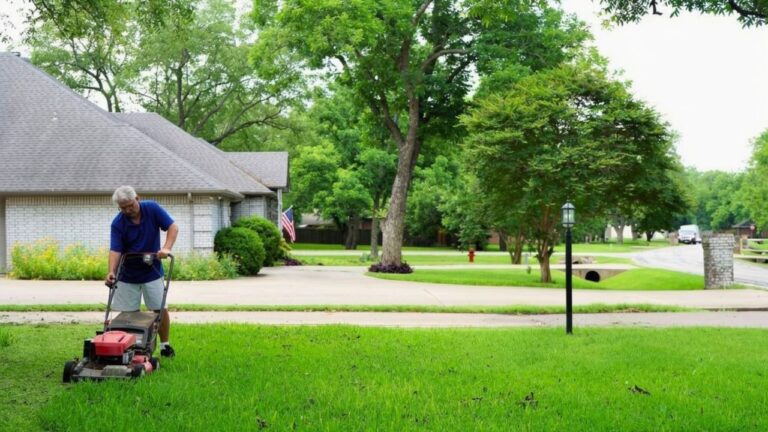
This is where McKinney has a strong family draw. It feels like a place built around people raising kids: parks, youth sports, churches, libraries, schools, neighborhood pools, and weekend events. That does not make it perfect. It does make it easy for families to imagine everyday life there.
The housing is expensive, but the value argument is still working
McKinney is not cheap in the way it might have been years ago. That ship has sailed. But buyers are often comparing it to Frisco, Plano, parts of Prosper, Allen, and other fast-growing areas where prices can feel even harder to swallow.
The Census Bureau’s 2020-2024 data lists McKinney’s median value of owner-occupied housing units at $496,700, with median selected monthly owner costs with a mortgage at $2,808. Those are not small numbers for a family budget. (census.gov)
Still, families may look at McKinney and feel they are getting more for the money than they would in some neighboring cities. That could mean a newer home, a bigger yard, a newer school zone, or a neighborhood with amenities. The affordability question is relative, and in North Texas right now, “relative” is doing a lot of work.
Property taxes are part of the hesitation
Here is where the dream gets a little less glossy. McKinney families are still dealing with the same North Texas reality everyone else is: property taxes, insurance, utility bills, maintenance, and higher home values can make the monthly number feel very different from the listing price.
McKinney’s city tax information lists multiple taxing entities, including the city, McKinney ISD, Collin County, and Collin College, with a total listed entity tax rate of 1.747147 per $100 assessed value. Homeowners still need to look at their exact property and exemptions, but the city’s own page makes the point clear: the tax bill is not one simple line. (mckinneytexas.org)
Families moving in should not just ask, “Can we afford the house?” They should ask, “Can we afford the house after taxes, insurance, HOA, utilities, tolls, commuting, and everything the kids will want to do?”
That is the grown-up version of the McKinney conversation.
Growth brings better amenities and more headaches
Growth is why McKinney has more restaurants, more stores, more medical offices, more entertainment, more services, and more housing choices. Growth is also why traffic feels worse, construction feels constant, and longtime residents sometimes wonder where the old version of town went.
The city’s development reports page tracks building activity, new business, permits, population estimates, and development trends, which shows how much of McKinney’s story is tied to ongoing expansion. (mckinneytexas.org)
That is the trade-off. Families want amenities, but amenities come with people. They want new development, but development brings road work. They want stores close by, but everyone else does too. McKinney’s biggest selling points are also what make it feel busier every year.
The north side keeps changing the map
For years, people talked about Plano and Frisco as the big northern suburbs. Now the growth conversation keeps moving farther north: McKinney, Prosper, Celina, Anna, Melissa, Sherman. McKinney sits in an interesting spot because it is no longer the edge of growth, but it still connects to the cities becoming the new edge.
That makes McKinney attractive to families who want established services without feeling like they are too far behind the wave. It has more build-out than some towns farther north, but it still has access to that northward growth energy.
That also means families should pay close attention to where in McKinney they are buying. The experience can vary a lot depending on whether someone is closer to historic downtown, U.S. 75, newer northern developments, major retail corridors, or quieter residential areas.
McKinney still sells a version of family life people want
At the end of the day, McKinney works because it gives families a picture they can understand. A house with space. A decent school conversation. Grocery stores and restaurants nearby. A downtown that feels like a real place. Parks and youth sports. Access to jobs without living in the middle of Dallas. A community that feels big enough to have things to do and small enough to still have an identity.
That picture is not cheap anymore. It comes with traffic, taxes, insurance costs, construction, and the occasional “why is this road backed up again?” moment. But families are still choosing it because the package makes sense to them.
McKinney is not the hidden bargain it once might have been. It is a growing North Texas city with real costs and real appeal. And for a lot of families, that combination is still enough to keep it near the top of the list.

Abbie Clark founded The Texas Reader to give Texas readers a clearer, more practical place to follow the stories affecting their homes, wallets, families, and communities.
As founder and editor, she oversees the site’s editorial direction, sourcing standards, corrections process, and daily coverage priorities. Her focus is on stories that are useful, understandable, and connected to real life.