What Houston Drivers Should Plan Around Before Hurricane Season Traffic Gets Ugly
Houston drivers already know traffic does not need much help getting bad. Add a tropical system in the Gulf, a few worried group texts, gas station lines, school closures, office changes, supply runs, and people trying to decide whether to stay or leave, and the roads can get messy long before a storm is anywhere near land.
That is the part families need to think about before hurricane season gets serious. Evacuation is not only about picking a route and hoping for the best. It is about timing, fuel, pets, medicine, documents, road construction, flood-prone streets, and knowing whether you actually live in an evacuation zone. Houston-area traffic can get rough on a regular Friday. During a hurricane threat, bad planning can turn a stressful drive into a dangerous one.
The goal is not to scare everyone into leaving for every storm. The goal is knowing what you would do if local officials tell your area to go.
Know whether you are actually in an evacuation zone
This is where a lot of people get confused. Not everyone in Houston needs to evacuate for every hurricane threat. In fact, unnecessary evacuation can make traffic worse for the people who really do need to leave, especially those in coastal or low-lying areas.
Houston TranStar points residents to Houston region evacuation maps, statewide evacuation maps, contraflow route information, and plans for major corridors such as I-10, I-45, and US-290. That is not light reading, but it is the kind of information families should understand before a storm is already spinning in the Gulf.
The Houston-Galveston region uses evacuation ZIP zones to help officials move the most vulnerable areas first. If you do not know your zone, figure it out now. Do not wait until everyone else is Googling it at the same time.
Leaving too early or too late can both cause problems
There is a balance here, and it matters. Leaving too late can put families on the road in worsening weather, with packed highways and limited options. Leaving too early when you are not in an evacuation zone can clog routes for coastal residents, medically vulnerable people, and those under official evacuation orders.
TxDOT’s hurricane preparation guidance tells Texans to know their evacuation route, keep emergency information accessible, keep a survival kit at home, and call 2-1-1 if they are elderly or disabled and need help.
That last part is important. A hurricane evacuation is not the same as a weekend road trip. People with medical needs, mobility issues, small children, pets, or limited transportation need extra planning time. The family that can toss bags in the car and leave in 20 minutes is not the family officials are most worried about.
Gas should not be a last-minute errand
Houston drivers know what happens when a storm threat gets serious: gas stations get busy fast. Some run low. Some have long lines. Some may lose power later. Waiting until evacuation traffic has already started is a good way to make a stressful situation worse.
A practical rule is to keep the tank at least half full during hurricane season, especially when there is an active system in the Gulf. That gives families more flexibility if they need to leave, pick someone up, make multiple supply runs, or sit in traffic longer than expected.
This is not about panic buying. It is about not letting a low fuel light make decisions for you when the roads are already packed.
Road construction can complicate evacuation routes
Houston-area drivers already deal with construction in normal times. During hurricane season, construction becomes more than an annoyance. Lane closures, narrowed roads, shifted ramps, and unfinished projects can affect how smoothly traffic moves when people are trying to leave.
That is why drivers should check official routes and road conditions instead of relying only on habit. The road you take to work may not be the route officials want evacuees using. A shortcut that looks clever on a normal day may not work when traffic control, closures, or flooding come into play.
Houston TranStar and TxDOT both maintain hurricane and traffic resources that are more useful than guessing from memory. If local officials tell people to use specific evacuation routes, follow those directions instead of trying to outsmart the system.
Flooding can make familiar roads useless
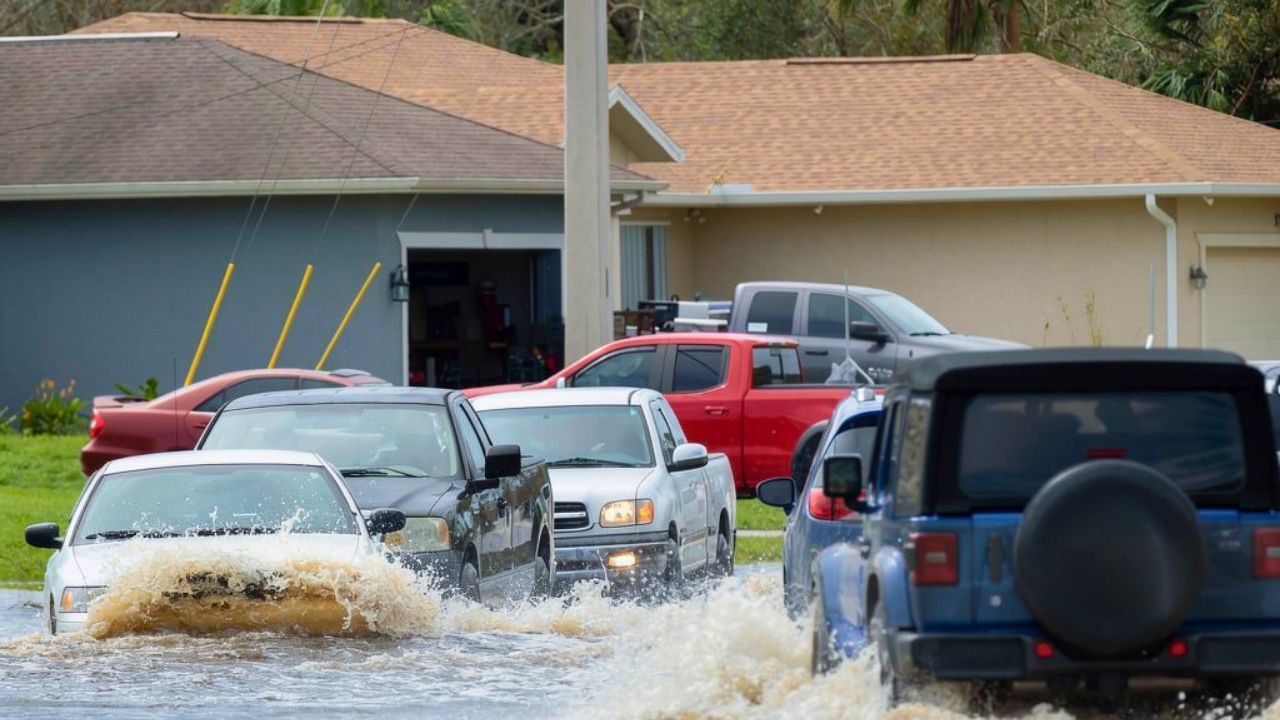
Houston does not need a named storm to flood. Heavy rainfall can make underpasses, frontage roads, side streets, and low-lying intersections dangerous quickly. During a tropical system, that risk becomes even more serious.
The worst mistake is assuming you know the road well enough to judge it. Floodwater can hide washed-out pavement, stalled vehicles, debris, and depth changes. If water is over the road, do not drive through it.
Families should plan routes that avoid known trouble spots, but they also need the mindset that the route may change. If a road floods, turn around. A vehicle is not a boat, and Houston has taught that lesson too many times.
Pets need to be part of the traffic plan
A lot of evacuation plans fall apart at the pet question. Where will the dog go? Does the hotel allow pets? Do you have a crate? Is there enough food? Are vaccination records accessible? What about cats that hide the second the carrier comes out?
Pets make evacuation slower, but leaving them behind should not be the plan. Families should know pet-friendly options ahead of time and keep supplies ready: food, water, leashes, carriers, medications, waste bags, bowls, and records.
If a family waits until the day of evacuation to solve the pet problem, the options may be much worse. Hotels fill. Shelters may have rules. Friends and relatives may already have full houses. Plan for the animals before the storm has a name.
Medical needs can make traffic more serious
For some families, evacuation traffic is inconvenient. For others, it can affect medication, oxygen, mobility, dialysis, refrigerated medicine, medical devices, or caregiving. Those households need more than a “we’ll leave if it gets bad” plan.
Harris County emergency guidance points residents to evacuation zones and tells people to listen to authorities on whether to evacuate or stay home. It also says people who are required to evacuate should bring an emergency supply kit, chargers, medicines, identification, and cash.
If someone in the household has medical needs, the plan should include extra travel time, backup power, medication refills, contact numbers, and a destination that can actually support those needs. Leaving without that plan can make a long traffic day much harder.
Important documents should be ready before the forecast turns ugly
When people leave in a rush, they forget things. Birth certificates, insurance documents, prescriptions, IDs, pet records, property paperwork, cash, chargers, and contact lists are easy to overlook when everyone is watching the radar and packing in a hurry.
A hurricane-season folder or waterproof pouch is not dramatic. It is practical. Keep the essentials together so you are not opening drawers while the rest of Houston is already lining up at gas stations.
That matters if you end up filing an insurance claim, checking into a hotel, proving identity, getting medical help, or dealing with damage after the storm. A good document plan saves time when your brain is already overloaded.
Do not wait for social media to make the decision
Social media can be helpful during storms, but it can also be a mess. Rumors move fast. Screenshots get shared without context. Old maps resurface. People post what they are doing as if their situation applies to everyone else.
Families should follow official sources first: local emergency management, Houston TranStar, TxDOT, National Weather Service Houston/Galveston, county alerts, and city guidance. The Houston-Galveston Area Council also provides hurricane evacuation planning resources and maps for the region.
Your cousin’s neighbor leaving for Dallas may not mean your part of Houston needs to evacuate. Your ZIP code, flood risk, medical needs, housing type, and official guidance matter more than panic posts.
The destination matters as much as the route
“Leave town” is not a plan. Where are you going? How long will it take? Does that place have room? Can you bring pets? Is there fuel along the way? Do you have cash if card systems go down? What happens if the route changes?
Families should choose a few destination options before hurricane season gets active. One may be with relatives inland. Another may be a hotel. Another may be a public shelter if needed. The point is having options that do not have to be invented during a crisis.
Also think about the return. Getting back into the Houston area after a storm can bring its own traffic, fuel, debris, power outage, and road closure problems. Do not assume the drive home will be simple just because the storm has passed.
Houston drivers need a plan before the warning
The worst time to build a hurricane traffic plan is when evacuation orders are already coming out and everyone is refreshing the same maps. By then, the roads are busier, supplies are thinner, and small mistakes feel bigger.
Before hurricane season gets ugly, Houston-area families should know their evacuation zone, route, fuel plan, document plan, pet plan, medical plan, and trusted information sources. They should also understand that not every storm requires everyone to leave, and unnecessary evacuation can create trouble for the people who most need clear roads.
Houston can handle a lot. Texans know that. But hurricane traffic is one of those situations where confidence is not enough. The families who do best are usually the ones who made the boring plan before the Gulf gave them a reason to use it.

Grady Howard contributes coverage on Texas public-interest stories, household costs, transportation, weather-related concerns, safety alerts, and consumer topics.
His reporting is built around practical context — what changed, why it matters, and what readers should pay attention to next.