Texas Museum Is Building a New Home for 113-Million-Year-Old Dinosaur Tracks
Texas has plenty of old stories, but this one is on a different timeline entirely.
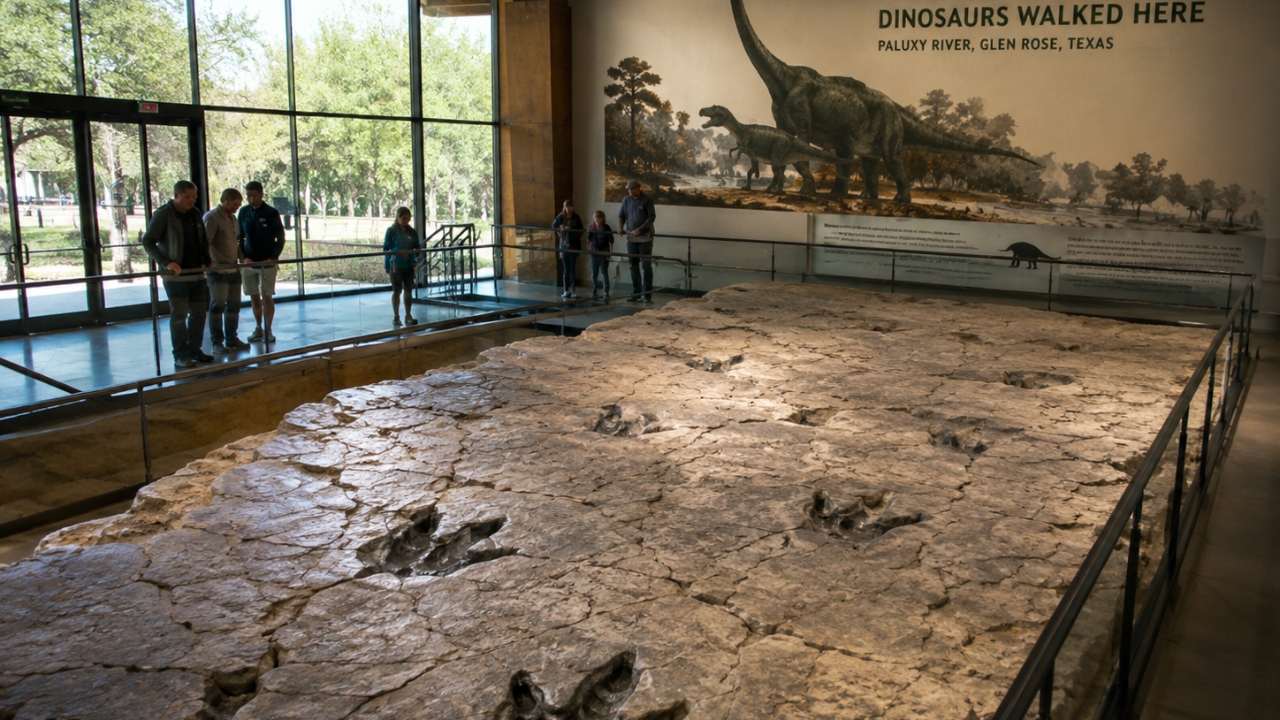
The Texas Science & Natural History Museum at the University of Texas at Austin is preparing to build a new home for fossilized dinosaur tracks that are about 113 million years old. These are not replica footprints, movie props, or roadside attraction decorations. They are real tracks left behind near what is now Glen Rose, Texas, back when dinosaurs were walking through the mud of the Early Cretaceous period.
According to MySA, the museum is moving forward with a $4.2 million project to build the Sarah and Ernest Butler Dinosaur Trackways Building, a 2,100-square-foot facility that will preserve and display the ancient footprints.
That is already interesting.
But the history behind the tracks makes it even better.
The footprints were discovered near the Paluxy River in the 1930s by paleontologist Roland T. Bird. The trackways include evidence of a massive sauropod dinosaur and a theropod predator. In normal-person terms, that means one of those huge long-necked plant-eating dinosaurs left tracks there, and a meat-eating dinosaur also crossed the same ancient landscape.
The Texas Science & Natural History Museum said the fossils are among the most significant dinosaur footprint discoveries in North America. One slab was sent to the American Museum of Natural History in New York, while another came to Austin through a Work Projects Administration effort and ended up at what was then known as the Texas Memorial Museum.
For decades, the Texas slab was kept in a small stone building next to the museum.
That building has been closed to the public since 2013 because of structural concerns and environmental conditions that could threaten the fossils over time. So even though these tracks are a major piece of Texas natural history, most people have not been able to see them up close for years.
That is what the new project is meant to change.
The museum says the new building will create a protective environment for the trackways and allow visitors to walk around them for viewing. That detail matters because it turns the fossils from something hidden away for preservation into something families, students, researchers, and dinosaur-loving kids can actually experience.
Construction is scheduled to begin in August 2026, with the building expected to open in October 2027.
There is something pretty remarkable about that timeline. The tracks sat in Texas limestone for more than 100 million years. They were discovered nearly a century ago. They were housed in a small building for decades. Then they were closed off to protect them. Now, if all goes as planned, they will finally get a modern public space built around them.
Texas has no shortage of big attractions, but this one has a different kind of pull. It connects a modern university campus in Austin with an ancient riverbed near Glen Rose and a prehistoric scene most of us can barely imagine.
A dinosaur stepped into soft mud.
Another dinosaur crossed the same area.
The mud hardened. The tracks survived. People found them millions of years later. And now Texas is spending millions to make sure they survive for future generations too.
The museum’s project will also include educational exhibits, programming, and garden spaces meant to connect visitors with Texas’ natural history. That makes sense because these tracks are not just cool because they are old. They tell a story about what Texas used to be before highways, ranches, football stadiums, suburbs, and cities.
Long before any of that, this place had dinosaurs.
And soon, Texans may be able to stand near their footprints and see that history for themselves.

Arlie Howard contributes coverage on consumer issues, family-focused stories, household concerns, scams, local cost-of-living topics, and real-life situations that affect Texas readers.
Her work focuses on explaining what happened clearly and helping readers understand the details that may matter most.