Homeowner Built a Fence, Then a Neighbor Harassed the Workers and Called Four Police Cars
The fence was supposed to solve a safety problem.
The homeowners had dealt with strangers wandering down the side of their house and even trying to enter their home. They had children, they wanted privacy, and they wanted a clear barrier around the front of the property. So the husband decided to build a front fence.
At first, there was no obvious reason to expect a neighborhood war.
The next-door neighbor, an older woman who lived alone, had once gotten along well with the couple. She was particular about her yard and grass, but that had not been a major issue. She even recommended a fence contractor when she was redoing part of her own backyard fence. When the husband contacted that contractor, he asked for a quote on his backyard and also on the front fence.
That was when everything changed.
The neighbor became furious because the new fence would block the route she had quietly been using for years. Her own fence did not fully run down the side of her house. It curved in and left a narrow strip of her property exposed. Because that space was so tight, she had apparently been walking across the couple’s property to access the side of her house whenever she wanted to clean leaves, move snow, or arrange work.
The couple said they had not cared much before because the relationship had been friendly. But once she accused them of stealing land, they no longer felt comfortable letting her come and go freely. They even offered her a key at one point so she could access what she needed, but she refused. According to the homeowner, the neighbor did not want a compromise. She wanted the fence stopped.
The homeowner shared the conflict in a Reddit update thread titled “Neighbor is acting erratically over me building a fence in the front of my house”, where the dispute quickly escalated from an argument over access into harassment, city complaints, police calls, and legal concerns.
The neighbor first called the alderman and accused the couple of taking her land. The alderman came out, looked at the situation, and sided with the homeowners. They had a survey showing the fence was on their property.
That did not stop her.
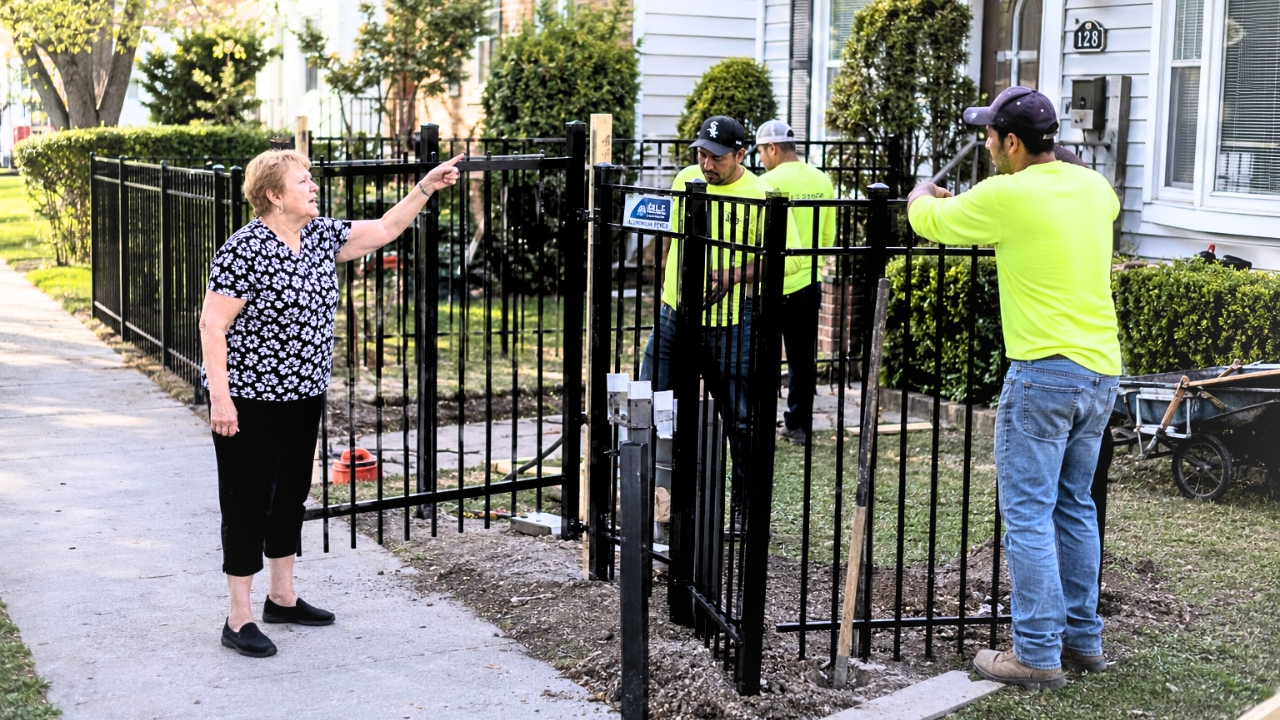
When the fence company began work, she harassed the workers and told them to stop. She accused the homeowners of stealing property, threatened to call inspectors, and kept returning whenever the husband stepped away. Eventually, she called the police.
Four police cars came.
Whatever she told them did not hold up. The police reportedly sided with the homeowners and told the neighbor to go inside and stop bothering them.
But the next day, she was back outside pacing and staring at the fence posts. She appeared on camera repeatedly, looking at the posts from different angles. She walked into the backyard area and stared there too. The homeowner described it as creepy because the neighbor seemed fixated, watching the fence as though the posts themselves were evidence of a crime.
The neighbor then started involving other people.
She flagged down neighbors she normally did not speak to and complained about the fence. She brought over a realtor friend and walked him to the homeowners’ property so he could inspect the posts. The husband came outside and asked why the man was looking at their property. The friend explained the neighbor had told him the couple had put posts on her land.
The homeowners showed him their proof. He apparently agreed with them and tried to mediate, explaining that they were legally allowed to build and that the neighbor could extend her own fence if she wanted easier access to her side yard. The neighbor refused.
Her position seemed to stay the same no matter who explained it: no, no, no.
At one point, a translation of a conversation between the neighbor and the realtor friend suggested he was trying to help her understand that she had blocked herself out. He asked why she needed entrance from that side when she had created the access issue herself. She kept returning to the idea that part of the space was “mine” and that no one had asked her permission.
The homeowners were not just annoyed. They were worried.
They had cameras, and the footage kept catching odd behavior. The neighbor stared, paced, watched from windows, touched the fence, pulled pieces of grass, and, according to one update, even spit on a fence post. The homeowner began telling her husband to record all conversations and stay in view of the cameras whenever possible.
The couple also considered whether the neighbor might be unwell. Commenters suggested Adult Protective Services because her behavior seemed sudden and obsessive. The homeowner said the neighbor was likely in her 70s or 80s, had a son in Poland and a sister who visited sometimes, and did not seem to have much family support nearby. But the homeowner was afraid of retaliation, including the possibility that the neighbor might make a false report involving their children.
Then the city complaints began.
After the fence panels were up, the homeowner came home from picking up her child and was approached by a man who said he was from city building and code enforcement. He briefly flashed an ID and said someone had complained that the fence was too tall. He told them a six-foot fence needed to be cut down to five feet and gave them 48 hours to get a permit.
The interaction felt strange. The man did not give a business card or email. He had already entered the property and walked around without ringing the doorbell. He had not measured anything. When the homeowner contacted the alderman’s office, she learned that the existing complaint was not about height at all. It alleged the fence was not on the property line, and no inspector had even been assigned yet.
The alderman’s office agreed something was off and said they would get someone downtown involved because the neighbor’s repeated complaints were turning into harassment.
Soon after, another neighbor down the block came to the fence and began touching it, pointing through it, and examining it because the next-door neighbor had told her there was a problem. The homeowner went outside calmly and explained that the claims were false, they had a permit, and they had a survey. When she looked over, the next-door neighbor was hiding near her bushes, apparently watching the whole exchange.
By then, the homeowner was exhausted.
She had tried to be reasonable. She had offered a key. Contractors had offered solutions. The alderman’s office had been involved. The city had been contacted. Police had already responded. None of it seemed to make the neighbor accept that the fence was on the homeowners’ property.
The situation continued in later updates. Workers returned to paint the fence and weld mesh onto it, and the neighbor accused them of welding the fence to her post. A representative from the alderman’s office came out and confirmed that was not true. During that interaction, the neighbor used a racial slur toward the homeowner and her family in front of the representative, which meant it was documented.
Another building inspector came after a new complaint. This time, the neighbor had allegedly reported that the homeowners were building a whole new garage without a permit. They had not changed the garage at all. The inspector saw that and closed the case immediately.
The homeowners filed a Freedom of Information Act request and learned there had been multiple 311 complaints about their address, including claims about a new garage, fence posts not being on the property line, and a side fence without a permit. According to the homeowner, the complaints were false and several had been made before the fence panels were even installed.
The neighbor also reportedly made a false claim to police that the husband had been yelling, waving his hands, and intimidating her while she was talking to other neighbors. A witness told police that did not happen, and the homeowners had video and audio of the interaction.
At that point, the couple stopped treating the situation as a misunderstanding.
They had tried mediation. They had called Adult Protective Services, but the neighbor refused help and would not provide family contact information. They began working with a lawyer and considering a cease-and-desist letter. The homeowner said they had proof of the neighbor’s lies and harassment, but the emotional toll was obvious. Even their children’s chalk drawings on the sidewalk became part of the conflict when the neighbor allegedly sprayed them off with a hose through her gate.
The fence had been built to protect the family from strangers wandering onto the property.
Instead, it exposed a bigger problem: a neighbor who believed years of informal access had turned someone else’s property into her right.
What commenters said
Commenters repeatedly urged the homeowners to document everything. Many told them to keep saving camera footage, audio, city records, police reports, and written communications because the pattern mattered more than any single incident.
A lot of people suspected the neighbor’s behavior might involve cognitive decline or another mental health issue, especially because she seemed fixated on the fence and unable to accept explanations from contractors, police, the alderman’s office, or even her own friend. Others said that possibility did not erase the need to protect the family.
The most common practical advice was to stop direct engagement, use cameras, get a lawyer, send a cease-and-desist letter, and consider harassment or restraining-order options if the false reports continued.
Commenters also reacted strongly to the false city and police complaints. To them, the issue had moved far beyond a disagreement over a fence. Once the neighbor began making repeated reports that could affect the homeowners’ record, safety, or family, people said the couple needed to treat it like a legal problem, not a neighborly misunderstanding.

Grady Howard contributes coverage on Texas public-interest stories, household costs, transportation, weather-related concerns, safety alerts, and consumer topics.
His reporting is built around practical context — what changed, why it matters, and what readers should pay attention to next.