Deputies Seized Six Horses in a West Texas Traffic Stop — Then the Case Turned Into a Livestock Smuggling Investigation
A West Texas traffic stop did not end with a warning, a ticket, or a routine roadside conversation.
It ended with six horses being seized.
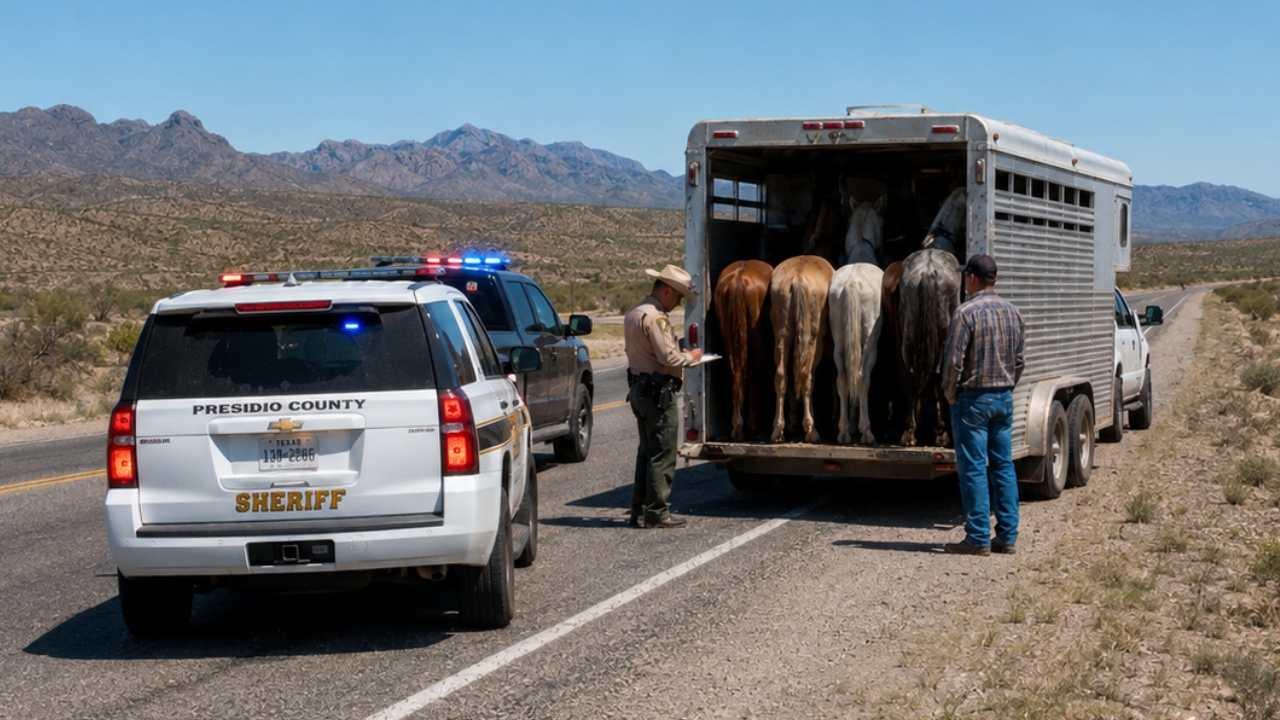
Presidio County sheriff’s deputies stopped a vehicle along FM 170 on May 26 as part of what authorities described as a livestock smuggling investigation. According to FOX 26 Houston, deputies were checking the horses’ Coggins health paperwork when the situation became more serious.
The driver reportedly told deputies the horses had been picked up in Redford, Texas, an area authorities said is known for unauthorized livestock crossings. Officials said the animals had entered the United States illegally.
That changed the whole stop.
At first glance, six horses in a trailer might not seem unusual in West Texas. In ranch country, livestock moving down a rural road is not automatically suspicious. Horses are hauled for sales, rodeos, ranch work, vet visits, and private ownership all the time.
But paperwork matters.
Health documentation is not just red tape when animals are crossing borders or moving through agricultural regions. It is one of the ways officials try to keep disease from spreading through livestock populations. When animals are moved illegally, authorities lose the ability to track where they came from, what they may have been exposed to, and whether they pose a risk to other animals.
That is why this case did not stop at the roadside.
The horses were turned over to the U.S. Department of Agriculture for testing and quarantine because of concerns involving New World screwworm. KLTV reported that screwworm is a parasite that lays eggs in open wounds, where the larvae feed on living tissue and can seriously injure livestock.
For people outside the livestock world, that may sound like a distant concern.
For ranchers, it is not.
New World screwworm is the kind of threat that can hit agriculture hard. The Texas Department of Agriculture warned earlier this month that a confirmed detection in Coahuila, Mexico, was close enough to the Texas border to raise serious concerns. Agriculture Commissioner Sid Miller said Texas was “on the front lines” and urged Texans to stay alert.
That context makes the Presidio County stop more than just a strange animal story.
It is also a border biosecurity story.
Illegal animal movement can create risks that go far beyond the people directly involved. If a disease or parasite gets introduced into a local livestock population, the impact can spread quickly. Ranchers can face quarantines, testing, financial losses, and animal health problems they did not cause.
That is why deputies were checking Coggins documentation in the first place. A Coggins test screens horses for equine infectious anemia, another serious disease concern in horses. When animals are being hauled without proper verification, it raises questions that law enforcement and agriculture officials cannot ignore.
According to the Presidio County Sheriff’s Office, the investigation into livestock smuggling in the area is ongoing.
The sheriff’s office has also increased border security efforts under Operation Stonegarden, a federal program that supports local law enforcement in border regions. In a place like Presidio County, where remote roads, ranch land, and the international border all meet, those investigations can involve more than one kind of smuggling concern.
This time, it was horses.
The case stands out because of the image: six horses seized from a trailer during a roadside stop in West Texas. But the deeper issue is what authorities say those horses represented — animals moved outside legal channels at a time when Texas officials are already watching closely for livestock disease threats.
No major public danger was reported from the stop, and the horses were placed into USDA hands for quarantine and testing. That is the part that matters most for surrounding livestock owners.
Still, the story is unusual enough to catch attention.
A traffic stop on FM 170 became a livestock smuggling case. Six horses were seized. Federal agriculture officials got involved. And in the background, Texas is watching carefully for a parasite that could cause real damage if it crosses into the wrong herd or pasture.
In West Texas, a trailer full of horses may look ordinary from the outside.
This one was not.

Grady Howard contributes coverage on Texas public-interest stories, household costs, transportation, weather-related concerns, safety alerts, and consumer topics.
His reporting is built around practical context — what changed, why it matters, and what readers should pay attention to next.