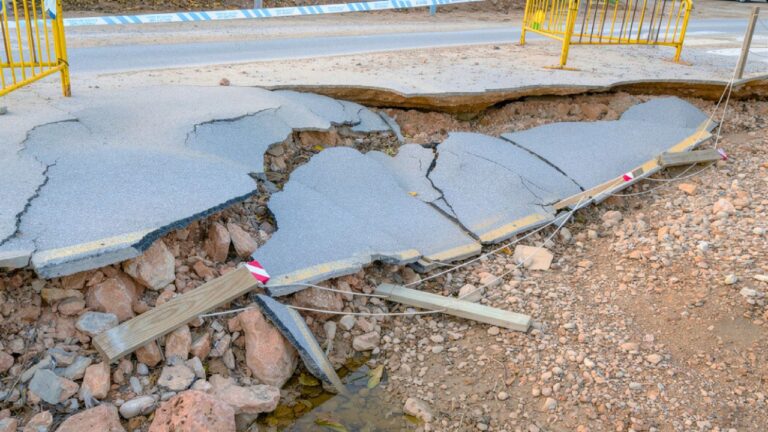
What Texans Should Know Before Buying a House Near a Flood-Prone Road
Photo credit: Young Swee Ming/shutterstock.com
A house can look perfect on a sunny day. The yard is dry, the street is clear, the ditch looks harmless, and the listing photos show the kind of peaceful Texas neighborhood people want to believe in. Then a hard rain comes through, the road disappears under water, and suddenly the pretty house has a very different story.
That is the part buyers need to check before closing, not after the first storm.
In Texas, flood risk is not limited to beachfront homes, river cabins, or houses sitting right beside a creek. Heavy rain, poor drainage, low-water crossings, backed-up ditches, undersized culverts, and fast neighborhood growth can all make a road flood even when the house itself looks fine. And if the road in or out floods, that can affect more than convenience. It can affect emergency access, school pickup, work commutes, insurance decisions, and whether the home feels safe during storm season.
Buying near a flood-prone road is not always a dealbreaker. But it should never be treated like a minor detail.
A dry showing does not tell the whole truth
Most buyers see a house when the weather is nice. That is when the yard looks best, the road looks normal, and any drainage problem is easier to miss. But flood-prone roads usually reveal themselves during hard rain, not during a 30-minute showing with the sun out.
Before making an offer, buyers should drive the area after a heavy rain if they can do it safely. Look at ditches, culverts, low spots, creek crossings, roadside erosion, water stains on fences, debris caught in branches, washed-out gravel, and muddy lines along the road.
Neighbors can also be brutally useful here. Ask them how the road behaves during storms. Ask if school buses still come through. Ask if emergency vehicles have trouble. Ask how often the road is covered and how long the water stays. You will usually get a more honest answer from someone walking their dog than from a listing description calling the area “peaceful.”
Flood maps help, but they are not the whole story
FEMA flood maps matter. Lenders, insurance companies, local governments, and buyers use them to understand official flood zones. FEMA says its Flood Map Service Center is the official public source for flood hazard information produced for the National Flood Insurance Program. Buyers can use it to find official flood maps and related flood hazard products.
That is a good starting point. It is not the finish line.
A property can sit outside a high-risk mapped flood zone and still have a road that floods. Local drainage problems, intense rainfall, blocked culverts, new development upstream, and low-water crossings may not feel fully captured by a broad map when you are trying to get home during a storm.
The Texas Water Development Board also maintains flood mapping resources and data tools, including state and federal mapping resources tied to flooding and floodplain management. Buyers should use every tool available, but they should still ask local questions and look at the land with their own eyes.
The road matters even if the house stays dry
A buyer may think, “The house is elevated, so we’re fine.” Maybe. But the road still matters.
If the only way in or out floods, the home can become temporarily cut off. That means no school drop-off, no work commute, no quick grocery run, and no easy way for help to reach the property. During a medical emergency, that is not a small issue. During a storm with kids at home, it can feel even bigger.
This is especially important for rural Texas properties, older neighborhoods, homes near creeks, areas with low-water crossings, and places where the road dips before reaching the driveway. A house can be technically untouched while the homeowner still cannot safely leave.
Buyers should ask whether there is more than one route out. If there is only one road, ask how often it floods and whether the county, city, or road district has plans to improve it. “It only floods during really bad rain” sounds better until Texas gives you really bad rain twice in one month.
Flood insurance should be priced before closing
Most standard homeowners policies do not cover flood damage. The Texas Department of Insurance says most home insurance policies do not cover flood damage, and homeowners may need a separate flood policy to make sure the property is covered.
That needs to be checked before closing, not after moving in.
Buyers should ask an insurance agent to price flood coverage for the exact address. Do not guess. Do not assume the lender will require it if it is needed. Do not assume it is unnecessary because the house is not in a high-risk flood zone. Ask what a flood policy would cost, what it covers, what it excludes, and when it takes effect.
TDI says National Flood Insurance Program policies can cover up to $250,000 for the home and up to $100,000 for belongings, and it notes that flood policies usually start 30 days after purchase. That waiting period matters. Buying coverage after a storm is already in the forecast is not a plan.
The seller’s disclosure deserves a very close read
Texas buyers should read the seller’s disclosure carefully, especially any section tied to flooding, water penetration, drainage, previous claims, flood insurance, or repairs. But they should not stop there.
A seller may only disclose what they know. A house may have changed hands before. A road may flood without water ever entering the structure. A past owner may have dealt with drainage issues that never became an insurance claim. A nearby low crossing may be known by locals but not obvious in the paperwork.
Ask direct questions. Has the road ever flooded? Has water ever reached the driveway? Has the yard held standing water? Has the home ever needed flood repairs? Has the seller carried flood insurance? Have neighbors had flood claims? Has the county ever closed the road?
The way people answer can be just as useful as the answer itself. Vague “not that I know of” responses should make buyers dig harder.
County and city records can tell a bigger story
Flood-prone roads are often known to local officials. Counties, cities, drainage districts, emergency management offices, and floodplain administrators may have information on floodplain maps, road closures, drainage complaints, culvert issues, planned improvements, and local flood history.
Buyers should call the local floodplain administrator or public works office before closing. It may feel like overkill, but it is better than finding out later that everyone in town already knew the road was a problem.
Ask whether the property is in a floodplain, whether building restrictions apply, whether permits would be needed for improvements, whether the road has a flood history, and whether any drainage projects are planned nearby. If the property is rural, ask the county. If it is inside city limits, ask the city.
This is the boring phone call that can save a buyer from a very expensive surprise.
Drainage improvements are not always simple
Some buyers see a drainage issue and think they can fix it later. Maybe they can. Maybe they cannot.
Culverts, ditches, grading, driveway work, retaining walls, French drains, detention areas, and road improvements can involve permits, engineering, easements, county rules, city rules, neighbor cooperation, and real money. A homeowner may not be allowed to simply redirect water because it could affect someone else’s property or the public road.
A low driveway entrance may need a culvert sized correctly. A washed-out ditch may need county involvement. A creek or floodplain area may have restrictions. A drainage problem caused by upstream development may not be solvable from one yard.
Before assuming “we’ll fix it,” get a contractor, drainage professional, or local official to explain what fixing it would actually involve.
New development can change old water patterns
Texas grows fast, and water notices. New subdivisions, parking lots, roads, rooftops, warehouses, and commercial projects can change how runoff moves through an area. Even when projects are built with drainage requirements, longtime residents may still notice changes after land around them gets developed.
That is why buyers should look beyond the lot they are buying. What is upstream? What land is being cleared nearby? Are there new subdivisions planned? Is a rural area becoming suburban? Is a field that used to absorb water turning into rooftops and pavement?
The Texas Water Development Board’s flood planning data includes resources compiled for regional flood planning groups, which is a reminder that flood risk is not only a single-home issue. It is regional, watershed-based, and tied to how water moves across land.
A road that barely handles today’s runoff may not handle tomorrow’s growth any better.
Flood damage is not the only cost
Even if water never enters the house, a flood-prone road can still cost money.
Vehicles may need extra maintenance if they regularly deal with standing water, mud, or washed-out roads. Driveways may need gravel, grading, or culvert repairs. Fences can catch debris. Landscaping can wash out. Trash pickup or deliveries may get delayed. Insurance may be more expensive. Resale may be harder if future buyers ask the same questions.
There is also the stress cost, which people tend to underestimate. Watching radar hits differently when you know the road dips before your driveway. Every heavy rain becomes a question: Can we get out? Can the kids get home? Will the road close again?
That may be tolerable for some buyers. For others, it becomes the thing they resent every storm season.
Flood-prone does not always mean “do not buy”
Some homes near flood-prone roads are still good buys. The house may be elevated, the flooding may be rare, there may be alternate access, flood insurance may be affordable, and the buyer may understand the trade-off. In rural Texas especially, some buyers are comfortable dealing with occasional road issues in exchange for land, privacy, or location.
The problem is not buying near flood risk. The problem is buying without knowing the risk.
Before closing, Texans should check FEMA maps, TWDB resources, local floodplain records, seller disclosures, insurance quotes, neighbor experiences, road access, drainage conditions, and any planned development nearby. Then they should decide with their eyes open.
A beautiful house on a sunny day can still be a smart purchase. But in Texas, you also need to know what happens when the rain comes down hard and the road out front starts telling the truth.

Abbie Clark founded The Texas Reader to give Texas readers a clearer, more practical place to follow the stories affecting their homes, wallets, families, and communities.
As founder and editor, she oversees the site’s editorial direction, sourcing standards, corrections process, and daily coverage priorities. Her focus is on stories that are useful, understandable, and connected to real life.