Man Thought He Kept Getting Food Poisoning — Then Learned a Tick Bite May Have Changed How His Body Reacts to Meat
At first, it sounded like the kind of problem a lot of people would blame on a bad meal.
A person eats something, gets sick later, and assumes the food must have been spoiled, undercooked, or handled the wrong way. Maybe it was a restaurant. Maybe it was leftovers. Maybe it was something greasy. Most people would not immediately think back to a tick bite.
But that is exactly what makes alpha-gal syndrome so confusing.
A recent Business Insider essay described one man’s experience after he thought he kept getting food poisoning, only to learn that a tick bite had changed the way his body reacted to red meat and pork. The writer said he lived in Tennessee, where tick bites are common, and eventually learned he had alpha-gal syndrome after repeated reactions and a blood test:
That is the part of the story that makes people stop scrolling.
This is not a normal food allergy story where someone eats a peanut or shellfish and immediately knows what happened. Alpha-gal syndrome can work on a delay. A person may eat beef, pork, lamb, venison, or another mammal-based food and feel fine at first. Then, hours later, the reaction begins.
The Centers for Disease Control and Prevention says alpha-gal syndrome is a serious, potentially life-threatening allergy that can develop after a tick bite. Alpha-gal is a sugar molecule found in most mammals, including cows and pigs, but not in people. The CDC says people with the condition may react after eating red meat or being exposed to other products that contain alpha-gal.
That delayed reaction is what makes the condition so easy to misunderstand.
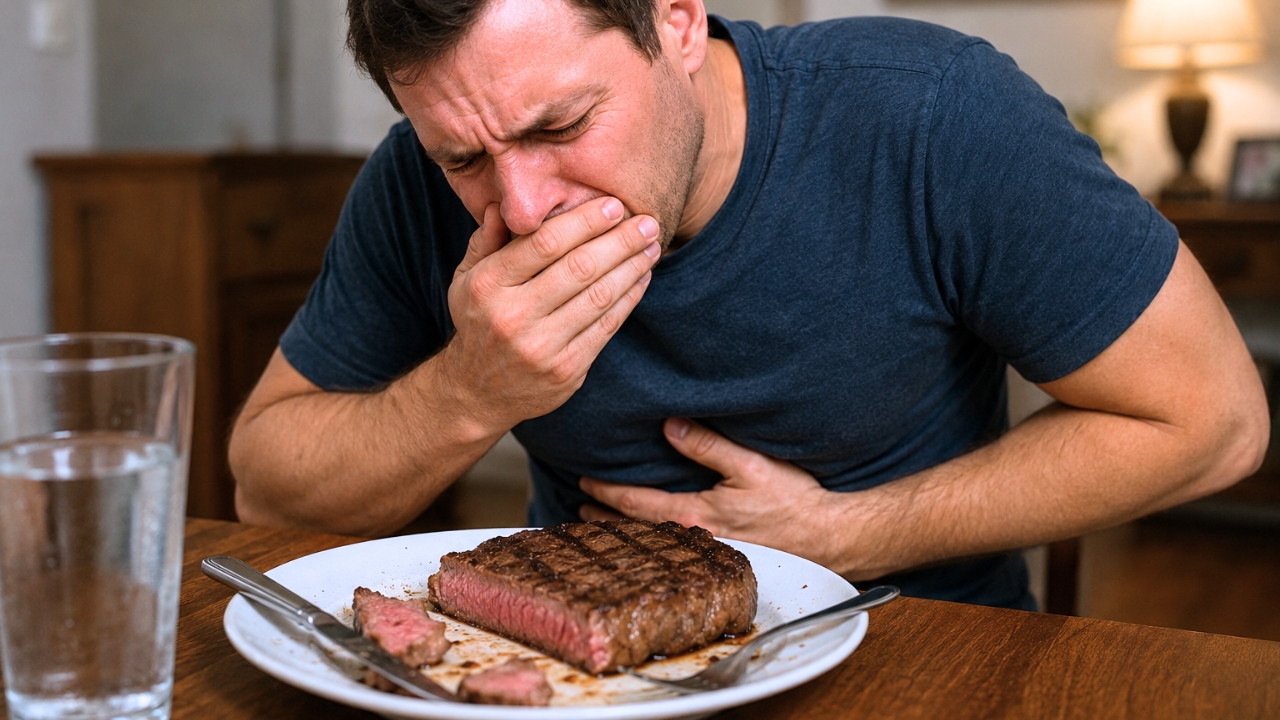
If someone eats a burger for dinner and wakes up in the middle of the night sick, they may blame the restaurant. If they eat pork at a cookout and feel awful hours later, they may think it was food poisoning. If it happens again after steak, sausage, ribs, or venison, they may not immediately connect the dots.
For the man in the Business Insider account, the diagnosis meant more than just giving up a few favorite foods. He wrote that he now avoids eating out because of cross-contamination concerns, checks ingredients closely, cooks most meals at home, and carries an EpiPen in case of a serious reaction.
That is a major lifestyle shift.
For many people, meat is not just food. It is part of family dinners, weekend grilling, hunting season, barbecue spots, road trips, holidays, tailgates, church potlucks, and quick meals after work. Suddenly having to question whether a meal contains beef, pork, dairy, gelatin, lard, broth, or hidden mammal-derived ingredients can make eating feel complicated fast.
The Mayo Clinic says alpha-gal syndrome can cause mild to severe reactions to red meat such as beef, pork, or lamb, and it can also cause reactions to products from mammals, including dairy or gelatin. The Mayo Clinic also notes that in the United States, the condition most often begins with the bite of the Lone Star tick
That Lone Star tick connection is why the story matters far beyond one person’s experience.
The Lone Star tick is common in parts of the South, Midwest, and East. It can be found in wooded, brushy, and grassy areas, and people can pick up ticks while hiking, hunting, mowing, gardening, camping, walking dogs, or even spending time near the edge of a yard.
The scary part is that a person does not have to be deep in the wilderness to get bitten.
Backyards, trails, fence lines, parks, fields, hunting leases, and wooded neighborhoods can all put people in contact with ticks. Dogs and outdoor cats can also bring ticks closer to the home if they are not checked regularly.
The CDC says the best way to protect yourself and your family from alpha-gal syndrome is to prevent tick bites. That includes using repellents, checking clothing and skin after time outdoors, showering after coming inside, and removing ticks properly if they are found.
For anyone who suddenly starts getting sick after eating red meat, especially several hours after the meal, this condition may be worth asking a doctor about.
That does not mean every upset stomach is alpha-gal syndrome. Food poisoning, viruses, food intolerance, stress, and other allergies can all cause symptoms too. But the pattern matters. Repeated delayed reactions after mammal-based foods, especially in someone who has had tick exposure, should not be ignored.
The man in the Business Insider story said the diagnosis forced him to change the way he eats, shops, cooks, and thinks about restaurants. But it also gave him an answer after repeated episodes that did not make sense.
That is what makes this tick-related illness so strange.
One tiny bite can turn an ordinary burger, steak, pork chop, or barbecue plate into something risky.
And for people who live in tick-heavy areas, that is a warning worth taking seriously before summer outdoor season gets any busier.

Arlie Howard contributes coverage on consumer issues, family-focused stories, household concerns, scams, local cost-of-living topics, and real-life situations that affect Texas readers.
Her work focuses on explaining what happened clearly and helping readers understand the details that may matter most.