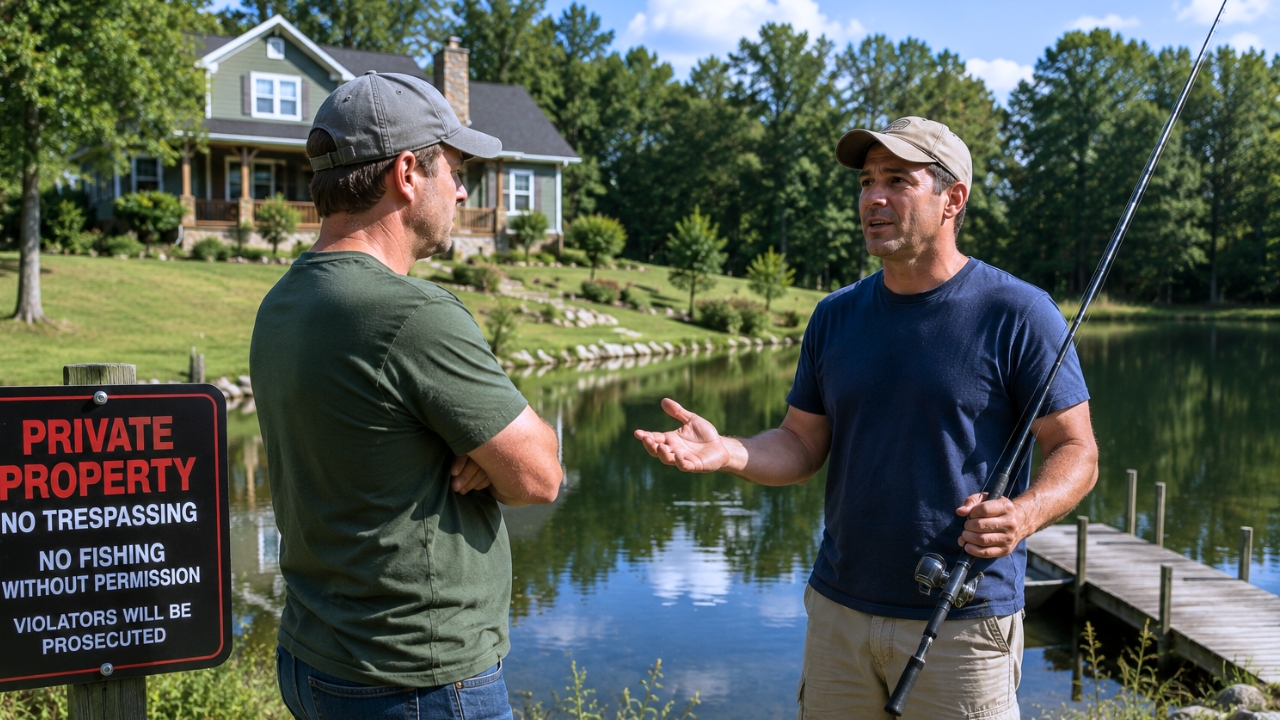
New Homeowners Bought Land With a Trophy-Fish Pond — Then Strangers Started Asking to Fish and Liability Became the Fear
Buying a home with land can feel like buying peace.
There is room to breathe. There is privacy. There is space that belongs to you. And for one family, there was also a pond stocked with trophy fish, the kind of feature that would make plenty of outdoorsmen slow down and stare.
But soon after buying the property, the new owners found themselves facing a problem they had not fully expected.
People wanted access.
The homeowner shared the situation on r/legaladvice, explaining that their family had purchased property with a pond that had been used for fishing, and they wanted to know how to protect themselves from liability if others came onto the land to fish: https://www.reddit.com/r/legaladvice/comments/df857z/how_do_i_protect_my_family_from_liability_when_we/
At first glance, it might sound harmless. A pond is there. Fish are in it. Maybe people in the area had fished there before under the previous owner. Maybe neighbors knew about the pond. Maybe friends, acquaintances, or strangers saw it as a local spot worth asking about.
But for the family that had just bought the place, the pond was not public.
It was part of their property.
That distinction mattered. What may have once been allowed casually by someone else did not automatically become a permanent invitation. New ownership means new boundaries, new rules, and new concerns. The family now had to think not only about who could fish there, but also what could happen if something went wrong.
A private pond can carry more risk than people realize.
Someone could slip on the bank. A child could get too close to the water. A person could get hurt by a hook, a falling branch, bad footing, a boat, or another person’s equipment. Someone could drink, act carelessly, damage the property, leave trash, or bring guests without permission. A peaceful fishing trip can turn into an emergency quickly when water is involved.
That was the heart of the homeowner’s concern. They were not just trying to be unfriendly. They were trying to protect their family from being blamed if someone got injured while using the pond.
The trophy-fish angle likely made the problem worse. A regular pond might draw a little curiosity. A pond known for good fishing can become a magnet. People talk. Someone says they caught a big one there. Someone else hears the new owners moved in. Then the requests start.
One person asks politely. Another assumes it is still allowed. A third person shows up with a buddy. Pretty soon, the homeowner is not just managing a pond. They are managing expectations.
That can put new property owners in an awkward position. They may want to be neighborly. They may not want to seem rude or hostile right after moving in. They may understand that locals feel attached to a place they used before. But they also have to live there. They have to pay the insurance, maintain the land, handle the cleanup, and deal with the consequences if visitors are careless.
The family’s question showed how quickly a nice property feature can become a legal worry.
Instead of simply enjoying the pond, they were thinking about liability. Should they let people fish at all? Should they require waivers? Would signs help? Could they be sued anyway? Would permission create more risk than saying no?
Those are not small questions for a homeowner.
They also had to think about control. If they allowed one person to fish, would that person bring others? Would someone assume permission applied forever? Would people come when the family was not home? Would the pond become a place the owners had to patrol?
The pond was supposed to be an asset. But once outsiders wanted to use it, it became something the owners had to protect.
That is the tension at the center of the story. A family bought private land with a beautiful fishing pond, and instead of only enjoying it, they had to figure out how to keep strangers, liability, and old habits from taking over.
What commenters said
Commenters generally told the homeowner to be careful about allowing access, especially because water creates serious liability concerns.
Several people said the simplest and safest option was to stop letting people fish there, post the property clearly, and treat the pond as private. Commenters warned that casual permission could become difficult to manage once people started seeing the pond as a shared fishing spot.
Others suggested speaking with an insurance agent to make sure the family had proper coverage for the pond and any recreational use of the property. If the owners planned to allow anyone to fish, commenters said they needed to understand exactly what their policy covered.
Some commenters discussed waivers, but many warned that a waiver is not a magic shield. It may help in some situations, but it does not guarantee the homeowner cannot be sued or pulled into a dispute after an injury.
There was also practical advice about signs, locked gates, written permission, and making sure any allowed guests followed clear rules. But the strongest theme was that the family did not owe anyone fishing access simply because the pond existed or because people may have fished there before.
To many commenters, the pond was private property first and a fishing spot second.

Grady Howard contributes coverage on Texas public-interest stories, household costs, transportation, weather-related concerns, safety alerts, and consumer topics.
His reporting is built around practical context — what changed, why it matters, and what readers should pay attention to next.