The Hidden Costs of Keeping a Big Yard Alive Through a Texas Summer
A big Texas yard can look like a dream in spring. The grass is green, the trees are leafed out, the flower beds still look manageable, and the whole place feels like room to breathe. Then summer arrives, the rain disappears, the heat settles in, and suddenly that big yard starts acting like another bill.
Keeping a large yard alive through a Texas summer is not only about watering more. It is water restrictions, higher utility bills, irrigation repairs, mowing, weeds, dead spots, pests, fertilizer, equipment, tree care, and the time it takes to keep everything from looking burned out by August. A yard that felt like an upgrade can become a weekly project with a monthly price tag.
That does not mean Texans should give up on their lawns or landscaping. It just means a big yard needs a real summer plan, not wishful thinking and a sprinkler running whenever the grass looks sad.
Water can become the biggest hidden cost
The first cost most homeowners notice is water. A large lawn can use a lot of it, especially when temperatures climb and rainfall gets inconsistent. Outdoor watering can become a major part of residential water use, which is why the Texas Water Development Board encourages water-wise landscape habits and says outdoor water can make up a large portion of overall home water use. (twdb.texas.gov)
That matters because watering mistakes are expensive. Watering too often, watering at the wrong time, watering pavement, or running sprinklers during wind can waste money without helping the grass much. A homeowner may think they are saving the yard, but a chunk of that water may be evaporating, running into the street, or pooling where the roots cannot use it.
Before summer gets rough, homeowners should learn how much water their system actually puts down and how quickly their soil absorbs it. Guessing usually costs more.
North Texas soil can make watering tricky
A lot of North Texas yards deal with heavy clay soil. Clay can hold moisture, but it can also absorb water slowly. If sprinklers run too long at once, water may start running off instead of soaking down to the roots.
That is why cycle-and-soak watering can help. Texas A&M AgriLife Extension materials note that north central Texas clay soils are prone to runoff when watered too fast for too long, and cycle-and-soak watering breaks irrigation into shorter rounds so the soil has time to absorb moisture.
For homeowners, this can mean running a sprinkler zone for a shorter time, pausing, then running it again later instead of trying to dump all the water at once. It takes more planning, but it can keep water on the lawn instead of down the curb.
The sprinkler system may be wasting money
An irrigation system can make yard care easier, but it can also waste a lot of money if it is not checked. Broken heads, tilted heads, clogged nozzles, leaking valves, overspray, poor pressure, and zones watering sidewalks can turn into a summer-long expense.
The problem is that many sprinkler issues are invisible until someone watches the system run. A homeowner may see the water bill climb but not realize one zone is spraying the fence, another is misting into the street, and one corner of the yard is getting missed entirely.
Texas A&M AgriLife recommends checking irrigation systems for leaks across the landscape and marking problems for repair. It also recommends watering early in the morning when wind speeds are normally lower and evaporation losses are reduced.
A quick sprinkler audit can save more than people expect. Run every zone, watch where the water goes, and fix the obvious waste before peak summer bills arrive.
Mowing costs more when the yard is bigger
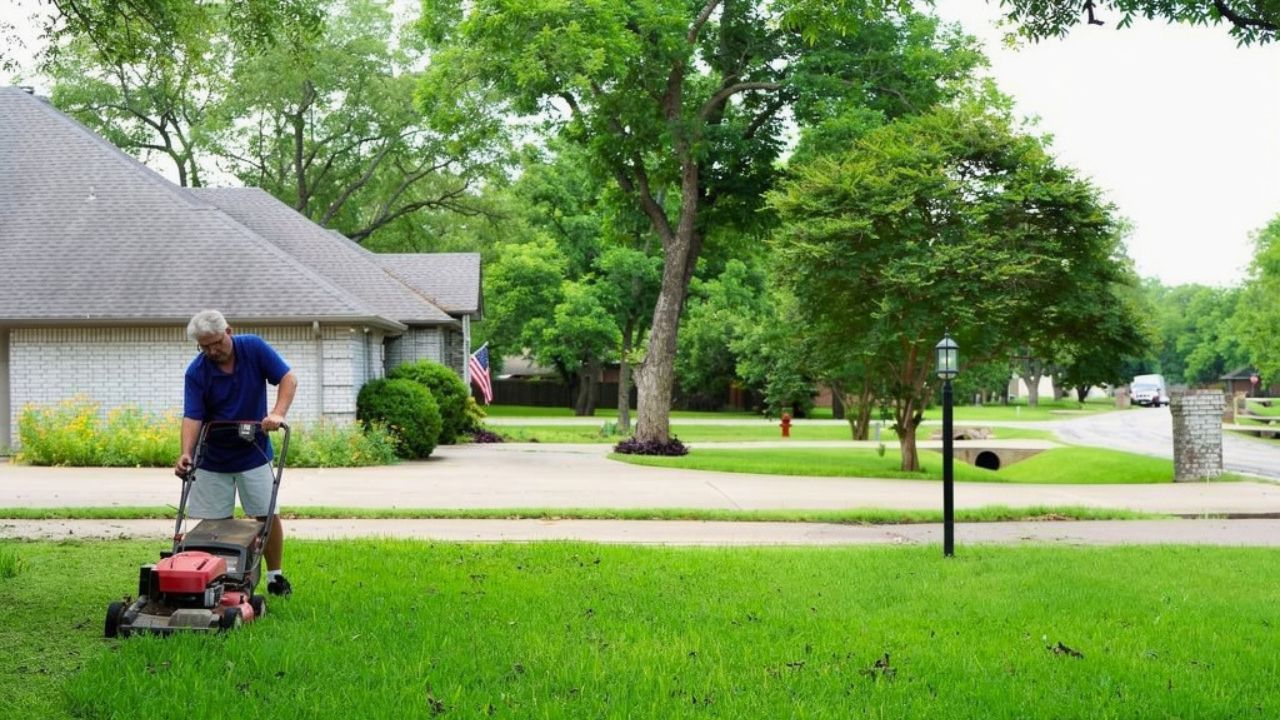
A large yard does not only need water. It needs mowing. That can mean more fuel, more maintenance, more blades, more time, and sometimes bigger equipment. A push mower may work for a small city lot, but a larger yard can quickly push homeowners toward a riding mower, zero-turn, utility trailer, trimmer, blower, and extra fuel cans.
That equipment does not stay free after purchase. Belts wear. Blades dull. Tires go flat. Batteries die. Oil needs changing. Filters need replacing. A yard that looked cheaper than hiring a lawn service can still cost plenty once the equipment side is counted.
Hiring help can be expensive too, especially for large lots, acreage-style properties, or yards with fences, slopes, ditches, lots of edging, or heavy trimming. The grass may be free to grow, but keeping it cut is not free.
Cutting too short can make the lawn struggle
A lot of homeowners cut grass shorter in summer because they want to mow less often. That can backfire. Scalping or cutting too low can stress the grass, expose soil to more heat, encourage weeds, and make the lawn need water sooner.
A taller mowing height can help shade the soil and support deeper roots, depending on the grass type. The exact height depends on the turf, but the principle is simple: in brutal heat, the grass needs help staying resilient.
Texas A&M AgriLife says warm-season turfgrass lawns in Texas usually need supplemental irrigation during the warmest months, generally May through September, and the amount depends on turfgrass species and climate conditions. Mowing and watering work together. A stressed lawn cut too short will usually be harder to keep alive.
Fertilizer mistakes can waste money or damage the lawn
Fertilizer feels like the obvious answer when a yard starts looking rough, but summer stress is not always a nutrient problem. Heat, drought, poor watering, compacted soil, disease, insects, shade, and mowing habits can all make grass look bad.
Throwing fertilizer at the wrong problem can waste money or make things worse. Over-fertilizing during heat stress can push growth the lawn cannot support, and applying products without knowing what the soil needs is mostly guessing.
The updated Texas Landscape Water Guide says soil testing through Texas A&M AgriLife Extension can help determine the best product for a lawn, and it calls a soil test the number one key to establishing and maintaining landscape plant materials.
A soil test is not flashy, but it can keep homeowners from buying products they do not need.
Weeds take advantage when grass gets stressed
Summer heat does not hit every plant the same way. When turf gets thin, weak, or patchy, weeds can move in fast. Bare spots, compacted soil, poor watering, and scalped grass all give weeds a better chance.
That can turn into another expense: herbicides, sprayers, pre-emergent products, post-emergent products, gloves, hand tools, or lawn service visits. The real cost is not only the product. It is fixing the conditions that let the weeds take over in the first place.
A healthier lawn with thicker growth usually has a better chance of crowding out weeds. That means watering correctly, mowing at the right height, improving soil where needed, and dealing with thin spots before they spread.
Trees and shrubs need attention too
A big yard often includes trees and shrubs, and those can become expensive in summer. Young trees may need deep watering. Older trees may drop limbs during storms. Shrubs can scorch, outgrow beds, attract pests, or die back when watering is inconsistent.
Tree problems can be especially costly because trimming, removal, stump grinding, and storm cleanup are not cheap. A dead or damaged limb over a roof, fence, driveway, or power line is not something homeowners should ignore.
Summer is also when poor planting choices become obvious. Shrubs that looked fine in spring may struggle in full Texas sun. Plants that need too much water may become expensive to keep alive. Over time, replacing high-maintenance landscaping with tougher, more drought-tolerant choices can lower the bill.
Flower beds can become a second water bill
Flower beds are easy to underestimate because they may not cover as much square footage as the lawn. But thirsty annuals, poor mulch coverage, shallow watering, and full-sun beds can require constant attention in summer.
Mulch can help reduce evaporation, moderate soil temperature, and slow weeds, but it needs to be applied correctly and refreshed when it breaks down or washes out. Drip irrigation can also be more efficient than spraying beds from above, especially when plants are spaced out.
The expensive mistake is planting for spring photos without thinking about August. A bed full of plants that need constant watering, deadheading, pest control, and replacement can become more work than the homeowner expected.
Water restrictions can change the whole plan
Texas homeowners also have to think about local watering rules. Cities and water districts may limit outdoor watering during drought, high demand, or conservation periods. A yard plan that depends on daily watering may not work when restrictions kick in.
This is where plant selection matters. Warm-season grasses can sometimes go dormant during drought and recover when conditions improve, depending on the turf and stress level. Warm-season turfgrass can enter summer dormancy during prolonged drought.
Homeowners should know the difference between a dead lawn and a dormant lawn before spending money trying to “fix” the wrong thing. They should also know their local watering schedule so they do not waste money or risk violations.
The time cost can be just as real as the money
A big yard costs money, but it also costs weekends. Mowing, trimming, watering, fixing sprinklers, pulling weeds, hauling mulch, pruning shrubs, repairing bare spots, cleaning up storm debris, and troubleshooting dead areas all take time.
That time cost matters for families with kids, jobs, summer travel, sports, and home projects. A yard may be worth it, but homeowners should be honest about the workload. If the only way the yard looks decent is by spending every Saturday fighting it, the landscaping plan may need to change.
Sometimes the cheaper long-term answer is simplifying. Smaller lawn areas, tougher plants, better mulch, fewer high-maintenance beds, improved irrigation, and realistic mowing areas can make the yard easier to keep up with.
A Texas summer yard needs a budget and a strategy
Keeping a big yard alive through a Texas summer is not impossible. But it is rarely effortless. Water, mowing, irrigation repairs, fertilizer, weed control, mulch, plant replacement, tree care, and equipment all add up.
The smartest approach is to stop treating the yard like one big green area and start treating it like zones. What needs regular watering? What can go dormant? What needs mulch? What needs shade? What is worth saving? What is costing too much for too little payoff?
A Texas yard can still be beautiful and useful in summer. But the ones that survive best usually have a plan behind them, not just a hose, a mower, and hope.