Bride Wanted Her Oldest Son to Walk Her Down the Aisle — Then Her Family Turned the Wedding Plan Into a Custody Threat
The bride was not trying to start a fight.
She was trying to decide who should walk her down the aisle.
For some brides, that decision is simple. Their father does it. Everyone knows the plan before anyone even asks. But for this woman, that place in the wedding carried grief with it. Her father had died when she was 12, and as she planned her wedding, she did not want to simply hand his role to another man and pretend it felt the same.
She was 32, marrying Dave, her childhood best friend. They had known each other their whole lives. Their families had been neighbors and close friends before the two of them were even born, and after her father died, Dave’s family helped care for her. Later, Dave’s family moved away during high school, but the connection stayed. Life went on. Dave got married and divorced. She had a surprise baby with someone else, then lost that child’s father in a work accident. Years later, she and Dave finally became a couple. They had been together for five years and now had a second son together.
So by the time they were planning the wedding, this was not some casual ceremony with no emotional weight.
It was a family story coming full circle.
In her Reddit post, “AITA for having my oldest son walk me down the isle?”, the bride explained that two older men in her life wanted the honor. Her uncle Joe, 54, wanted to walk her. So did her stepfather, John, 50, who had been in her life for 10 years.
She loved both of them.
That mattered.
This was not about rejecting them as people. It was about the feeling of the moment. Having either her uncle or her stepfather walk her down the aisle felt, to her, like replacing her dad. And she did not want that. Some losses are not positions to be refilled. They remain what they are.
Then her oldest son asked if he could walk her.
To the bride, that felt right.
It was not a compromise forced on her. It was not something she invented to hurt the adults. Her son asked. She loved the idea. It would be meaningful, sweet, and personal. It would honor the family she had built without pretending her father’s absence could be patched over by tradition.
As the bride saw it, that should have been her choice.
Her mother disagreed.
According to the bride, her mother hated the idea and kept contacting her, insisting she had to choose either her uncle or her stepfather because that was how it was “supposed” to be done. The mother was not treating it like a gentle opinion. She was pushing it repeatedly, as if the bride had somehow misunderstood her own wedding.
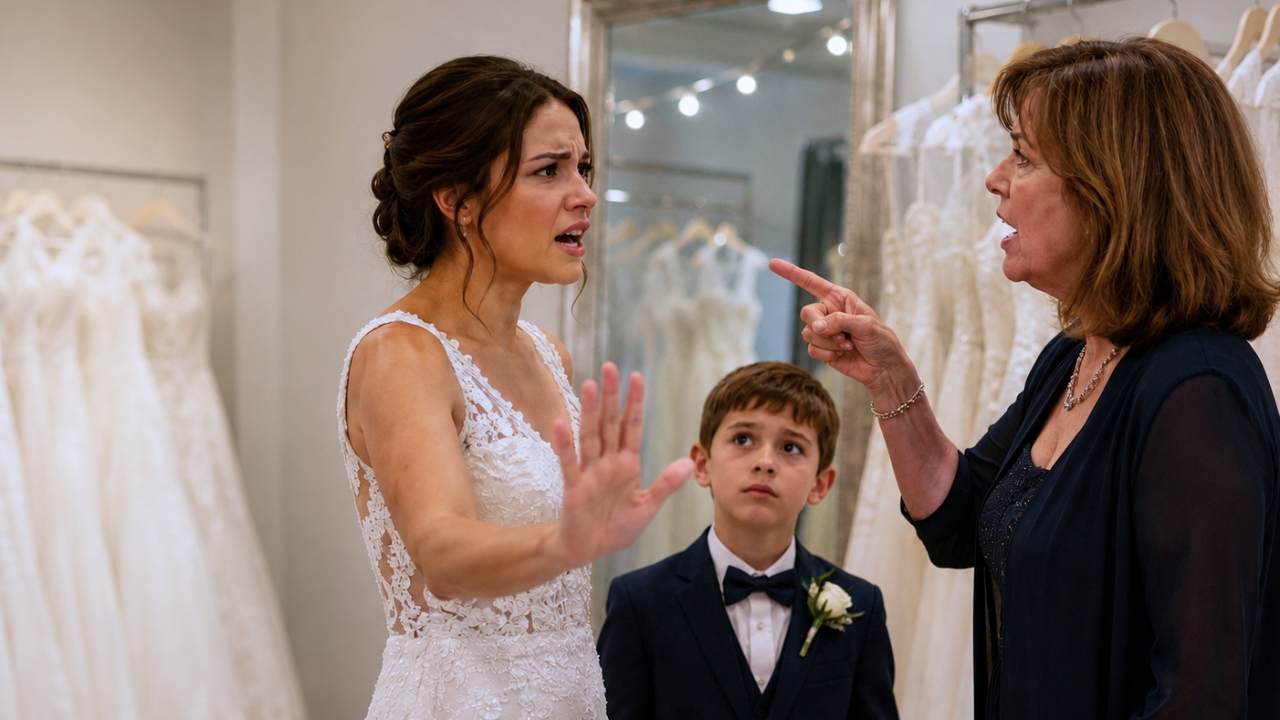
Then things came to a head during dress shopping.
That should have been one of those happy wedding-planning days, the kind where people cry over lace and take pictures and argue only about veils. Instead, the mother finally snapped.
She told the bride that if she did not choose a grown man, she would keep the bride’s oldest son, and neither of them would attend the wedding. The mother also said she would not allow the bride to embarrass her child.
That was the moment the conflict stopped being about wedding tradition.
Because threatening to keep someone’s child from attending their own mother’s wedding is not normal disagreement. It is not “I wish you would do this differently.” It is not “I worry he might feel awkward.” It is a control move. And the bride had every reason to be furious.
She yelled back.
She told her mother to stop, said her oldest son had asked to walk her, and reminded her that this was her wedding and her child. If her mother kept going, she said, then her mother would be uninvited.
After that, they were not speaking.
The bride wondered whether she had gone too far. She understood that the walk down the aisle was only a few minutes of the whole wedding. She knew her mother felt strongly. She wondered if she should compromise.
But there is a difference between compromise and surrender.
A compromise might have looked like finding another role for her uncle and stepfather. Maybe one could do a reading. Maybe one could make a toast. Maybe both could have a special dance or be honored in another way. Weddings have room for meaningful gestures if people are willing to be generous.
But what her mother demanded was not really compromise.
Her mother wanted the bride to choose a grown man because tradition said so. She wanted the bride’s son removed from that role even though he asked for it. And when the bride resisted, her mother threatened to withhold the child from the wedding entirely.
That is not a small thing.
It also ignored the emotional beauty of what the son had offered. This child had lost his biological father. His mother had lost her father. Now, on the day she married a man who had been part of her life since childhood, her son wanted to walk beside her. There was something deeply full-circle about that. Not because he was taking ownership of her, but because he was standing with her as part of the family being joined.
The mother saw embarrassment.
The bride saw love.
And that difference is what made the argument hurt so much.
A wedding does not have to follow every old rule to be meaningful. Sometimes the most memorable parts are the ones that fit the actual people standing there, not the version of the ceremony someone else imagined years ago.
For this bride, having her oldest son walk her down the aisle was not a rejection of family.
It was an expression of it.
What commenters said
Commenters strongly sided with the bride.
Many said it was her wedding and her decision, not her mother’s. They pointed out that the bride was a grown woman, and the person walking her down the aisle should be someone who felt meaningful to her, not whoever best satisfied family expectations.
A lot of commenters thought the son’s request was sweet. They said if he wanted to walk his mother down the aisle, and she wanted him there, that should have been enough. Several also noted that the tradition itself has changed over time, and plenty of brides now choose mothers, children, siblings, friends, or no escort at all.
The biggest concern was the mother’s threat to “keep” the bride’s son from the wedding. Commenters found that alarming and controlling. Some questioned how she thought she had the right to do that at all, and others said the bride should be careful about letting her mother have access to the child around the wedding.
Others suggested giving the uncle and stepfather different roles if the bride wanted to honor them without handing them her father’s place. But commenters were clear that she did not owe them the aisle walk simply because they wanted it.
The strongest message was that the bride was not embarrassing her son. She was listening to him. He asked for a meaningful role, his mother accepted, and the only person turning that into a problem was the adult trying to control the wedding.

Arlie Howard contributes coverage on consumer issues, family-focused stories, household concerns, scams, local cost-of-living topics, and real-life situations that affect Texas readers.
Her work focuses on explaining what happened clearly and helping readers understand the details that may matter most.