The Roof Problems North Texas Homeowners Should Not Ignore After High Winds
High winds can leave behind damage that does not look dramatic at first. A few lifted shingles, a loose ridge cap, a bent vent, or a small piece of flashing hanging near the chimney may not seem urgent when there is no water dripping into the living room. That is what makes wind damage tricky. It can look minor from the ground while creating the kind of opening that gets worse with the next hard rain.
For North Texas homeowners, this is especially important because wind rarely shows up alone. Spring and summer storms can bring hail, heavy rain, lightning, fallen limbs, and fast-moving gusts in the same round of weather. The National Weather Service defines severe thunderstorms as storms capable of producing hail at least one inch in diameter or wind gusts over 58 mph, which is strong enough to break large branches, knock over trees, or cause structural damage to trees. It can also damage roofs, vehicles, and other property.
The problem is that many homeowners only look for obvious damage. If the roof is still mostly attached and the ceiling is dry, they assume everything is fine. That can be an expensive assumption.
Lifted shingles can become a leak later
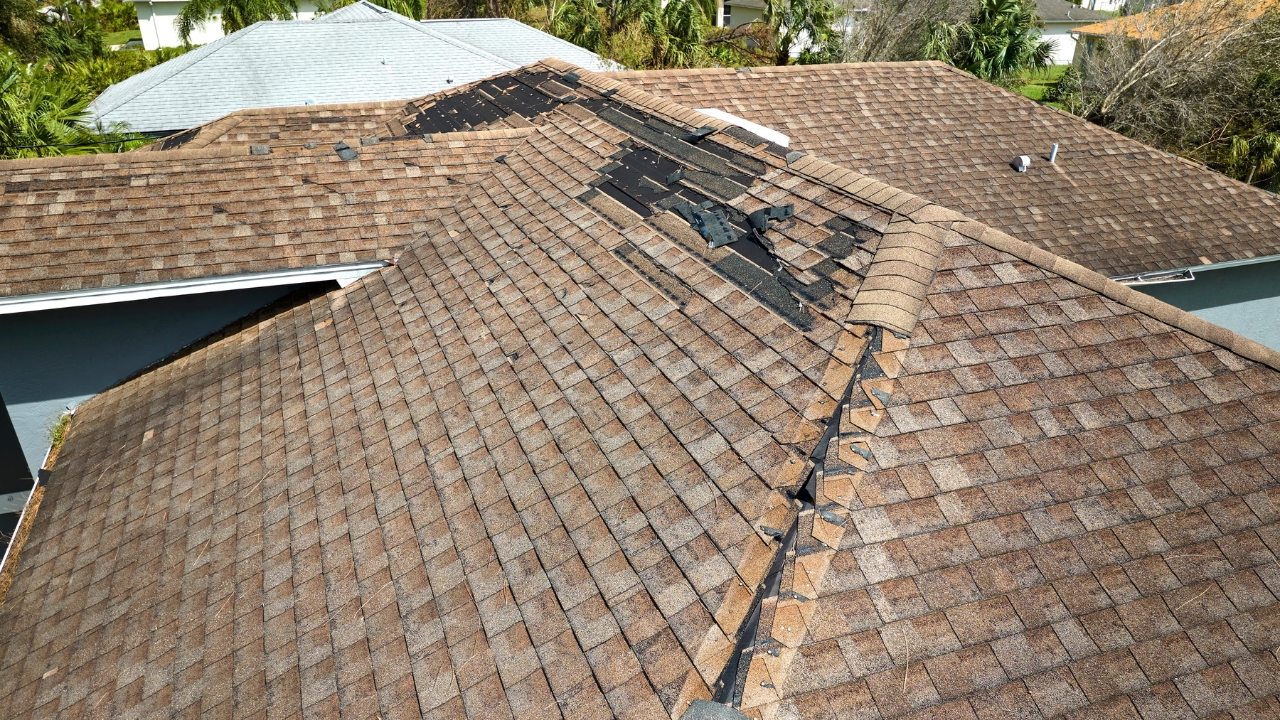
One of the most common wind-related roof problems is lifted shingles. From the yard, the roof may look normal. Up close, some shingles may be creased, loosened, or pulled slightly away from the roof surface. The seal may be broken even if the shingle is still sitting in place.
That matters because shingles are supposed to work as a layered system. Once wind gets under an edge, the next storm has an easier starting point. Rain can work its way underneath, and over time the exposed area can spread. A lifted shingle today can become a missing shingle later.
Homeowners should look for uneven shingle lines, corners that appear raised, shingles flapping during wind, or spots where the roof surface looks rougher than nearby sections. If the home recently went through strong wind, those small changes are worth having checked before the next round of weather.
Missing shingles are not the only warning sign
Missing shingles are easy to spot because they leave bare patches or darker sections on the roof. But a roof can be damaged even when every shingle is technically still there.
Creased shingles are one example. Wind can bend a shingle backward and leave a visible line or weak point. That shingle may not protect the roof the same way anymore, even if it settles back down. Granule loss can also be a clue, especially if homeowners notice piles of roof grit in gutters or at downspout exits after a storm.
The Texas Department of Insurance says a roof is a home’s first line of defense against severe weather and encourages homeowners to understand roof coverage before buying a policy, filing a claim, or replacing a roof. That is practical advice in North Texas, where roof damage is not always obvious right away.
Flashing damage can send water into the wrong places
Flashing protects some of the most vulnerable parts of the roof, including chimneys, vents, skylights, wall intersections, and roof valleys. When wind loosens flashing, water can get into places homeowners may not check until damage spreads.
A small flashing problem can show up later as a ceiling stain, a damp smell, peeling paint, or soft drywall. It may not leak during every rain, which makes it harder to connect the damage to the storm that caused it.
Homeowners should look from the ground for loose metal, gaps around roof penetrations, bent vent covers, missing chimney caps, or anything that looks shifted. Inside, they should check ceilings, closets, attic areas, and upper walls after the next rain. Water often travels before it shows itself, so the stain may not appear directly below the roof problem.
Gutters can tell part of the story
After high winds, gutters are worth checking even if the roof looks fine. Bent gutters, loose hangers, sections pulling away from fascia boards, or downspouts knocked out of place can all point to storm stress around the roofline.
Gutters can also collect clues. Shingle granules, small pieces of roofing material, leaves packed into valleys, and broken branches near downspouts may show that the roof took more punishment than it appears from the yard.
A clogged or damaged gutter system can create its own problems. Heavy rain may spill over the edge, push water toward the foundation, soak fascia boards, or send runoff behind siding. After a windstorm, homeowners should make sure gutters are still attached, draining, and moving water away from the house.
Attic checks can catch leaks before ceilings do
The attic is one of the best places to look after high winds because it may reveal problems before the living space does. Homeowners should use a flashlight and look for damp insulation, dark stains on decking, water trails, daylight through roof boards, wet areas around vents, or musty smells.
This check matters because a small leak can hide for a while. It may wet insulation first, stain roof decking, or drip behind a wall before it ever makes a mark on the ceiling. By the time the living room ceiling shows damage, the problem may already be bigger than it needed to be.
Homeowners should be careful walking in an attic and avoid stepping anywhere that is not meant to support weight. But even a cautious look from the access point can reveal obvious warning signs.
Tree damage may be worse than it looks
High winds often leave branches on the ground, but not every damaged limb falls right away. Some crack and stay hung up in the canopy. Others scrape shingles, bend gutters, or pull at roof edges before breaking loose.
After a storm, homeowners should look for branches touching the roof, fresh scrapes, piles of leaves or bark in one area, damaged gutters, or limbs hanging over bedrooms, garages, or outdoor structures. A branch that barely missed the house once may not miss it again.
Large limbs near the roof should not be treated as a weekend guessing game. If the tree is tall, close to power lines, or leaning toward the house, calling a professional is usually the safer move.
Insurance details matter before repairs start
Wind damage can create insurance questions, especially when a roof is older or the policy has specific wind and hail terms. One homeowner may have replacement cost coverage while another has actual cash value coverage, and that difference can affect what the policy pays.
The Texas Department of Insurance explains that actual cash value coverage factors in depreciation, while replacement cost coverage is designed to pay the cost to replace damaged property with new property of similar kind and quality, subject to the policy terms and deductible.
Homeowners do not need to become insurance experts overnight, but they should know what kind of roof coverage they have before a claim is needed. If a storm caused damage, they should document it, contact the insurance company, and avoid permanent repairs before the adjuster has a chance to review the property unless the insurer says otherwise.
Temporary protection may be needed before permanent repairs
If high wind leaves an opening where water can get inside, homeowners should not ignore it while waiting for estimates. Temporary repairs may be necessary to prevent more damage. That can mean tarping a roof, covering a broken window, or moving belongings away from a leak.
The important part is documentation. Take photos and video before the temporary repair, keep receipts, and make notes about what happened. The Texas Department of Insurance advises homeowners to make temporary repairs to prevent more damage after a storm, save receipts, and wait on permanent repairs until the insurance company has inspected the damage.
That protects the home without making the damage harder to verify later.
Small roof problems should not wait for the next storm
The most expensive roof problems are not always the ones that look dramatic right away. Sometimes it is the lifted shingle that turns into a leak, the loose flashing that lets water into a wall, or the clogged gutter that keeps soaking the same spot every time it rains.
For North Texas homeowners, a post-wind check does not have to be complicated. Look at the roofline from the ground. Check gutters and downspouts. Walk the attic safely. Watch for ceiling stains after the next rain. Photograph anything that looks different. Then get a qualified inspection if something seems off.
High winds move fast. Roof damage can move slower. That is why catching the small signs early can make the difference between a manageable repair and a much bigger problem later.

Arlie Howard contributes coverage on consumer issues, family-focused stories, household concerns, scams, local cost-of-living topics, and real-life situations that affect Texas readers.
Her work focuses on explaining what happened clearly and helping readers understand the details that may matter most.